
Abstract
The future of Pakistan is reliant on the Shift of the Youth into a productive, skilled workforce. Unfortunately, in Public schools, the Skill-Based Education framework (SBE) has deeply systemic challenges. Quantitative and qualitative research with 384 students and 284 teachers highlights the disparity between policy and practice. It indicates the shortage of means, teacher readiness, and curriculum. To this, the researcher has designed the Integrated Skill-Based Education Framework (ISEF), which is particularly and elaborately designed for this context. Its four pillars are a foundational framework: policy and governance alignment, industry partnership and relevant curriculum construction, an implementation engine, teacher and infrastructure development with industry linkage, a student journey with active and hands-on learning, and a performance & impact loop with analytics and evaluation at the end. Active and engaged skill learning closes the gap on impactful, sustainable, and version change for Pakistan. ISEF serves as a primary approach in governance.
Keywords
Proposed Skill-Based Education Model, Educational Reform, TVET Policy, Workforce Development, Implementation of Skill-Based Education
Introduction
The global economy is experiencing a major shift, and "success" nowadays is determined more by skills rather than a collection of information. "Pakistan is one of many nations attempting to undergo a profound economic and social shift in this new reality and thus needs to reform its educational systems urgently" (Ali et al. 2024; Safdar et al. 2024). Being a country striving to accomplish complex social and economic shifts, the Pakistani educational systems require immediate reform. The global economy today values the ability to think critically, approach complex problems, and flexibly adapt to digital work environments (Rahman et al. 2021; Jacobs 2019). The entire paradigm has shifted to the acquisition of skills relevant to the future economy, rich in social and emotional learning elements, in addition to high-level metacognitive understanding (Hauser 2016).
The first and simplest response to this demand is Skill-Based Education (SBE), which focuses on embracing particular skills and their application on a practical level instead of satisfying course requirements (Zafar et al., 2025). This form of learning is constructed around a scaffolding framework of practice, thoughtful and reflective digital integration, and situated learning on authentic problems (Jacobs, 2019; Zaman et al., 2024). Central to this is Competency-Based Education (CBE), which is a dynamic and expansive domain that includes contemporary phenomena such as CBE-developed self-paced micro learning and open digital micro credentials that are shareable and verifiably secured on blockchain, as illustrated in Figure 1 (Sistermans, 2020). SBE's focus on demonstrated achievements and competencies will result in more agile, capable, and relevant professionals.
This global imperative is particularly acute in Pakistan, a nation at a demographic crossroads. Despite possessing one of the world's largest youth populations, the country's educational outcomes lag significantly behind its labor market demands, creating a paradox of widespread youth unemployment amidst a call for skilled labor (Ali et al., 2024; Dagore & Singh, 2025). The challenges are systemic and well-documented: curricula remain outdated, collaboration between industry and academia is weak, and a persistent gap exists between policy intention and on-the-ground implementation (Ali et al., 2024; Søreide et al., 2021). Consequently, a cohesive lifelong learning pathway that integrates skill development remains elusive, hindering both individual career advancement and national economic growth (Asad et al., 2024).
While there is no shortage of scholarly work on individual components of educational reform, these efforts are often fragmented. For instance, extensive research has been devoted to developing teacher-specific competence frameworks, resulting in numerous valuable but siloed models such as DigCompEdu, TPACK, and others, as categorized in Figure 2 (Jin et al., 2020). However, a superior teacher framework alone is insufficient to reform an entire ecosystem. The critical research problem, therefore, is the absence of a holistic, integrated, and context-specific model that addresses the interconnected barriers to SBE in Pakistan. What is needed is a blueprint that moves beyond isolated fixes to provide a systemic solution.
This paper moves from diagnosis to design. It addresses this gap by proposing the Integrated Skill-Based Education Framework (ISEF), a holistic model tailored to the specific needs and context of Pakistan. Crucially, this framework is not a mere theoretical construct but the culmination of an extensive mixed-methods study conducted across 19 public higher secondary schools in Punjab. It was systematically forged from the ground up, synthesizing quantitative findings from 384 student questionnaires with rich qualitative insights from 284 teacher interviews and 60 participants in focus group discussions. To construct this empirically grounded model, we draw upon a robust theoretical scaffold that justifies its core principles. We integrate the cyclical process of Kolb's experiential learning theory to ground our emphasis on hands-on practice (Miliou et al., 2024), the student-centered principles of constructivism to support project-based work (Ofei-Manu & Didham, 2018), and the compelling economic rationale of human capital theory to underscore the national importance of investing in skills (Dewra, 2025). By weaving together firsthand empirical data with established theory, this paper presents an actionable roadmap to unlock Pakistan's human potential and drive its future success.
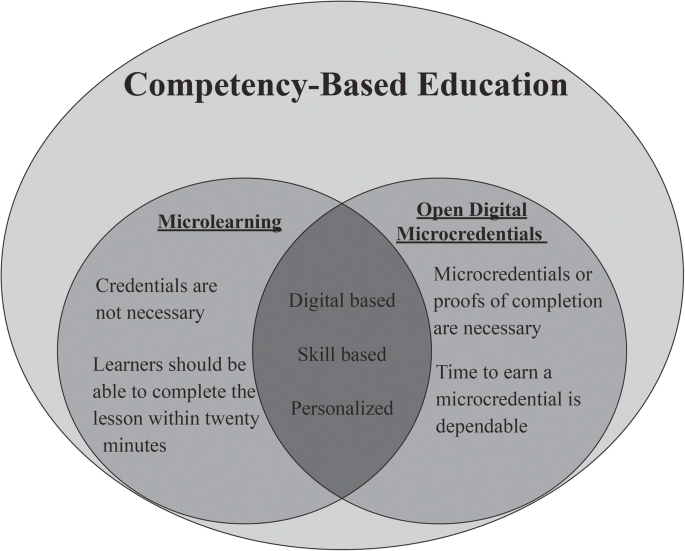
A Conceptual Model of Competency-Based Education (CBE). This figure illustrates the relationship between the broader field of CBE and two key modern approaches: Microlearning, which focuses on short, digestible lessons, and Open Digital Micro-credentials, which provide verifiable proof of skill acquisition. The intersection highlights that both are increasingly digital, skill-based, and personalized, representing key trends in modern educational design adapted from Sistermans (2020).
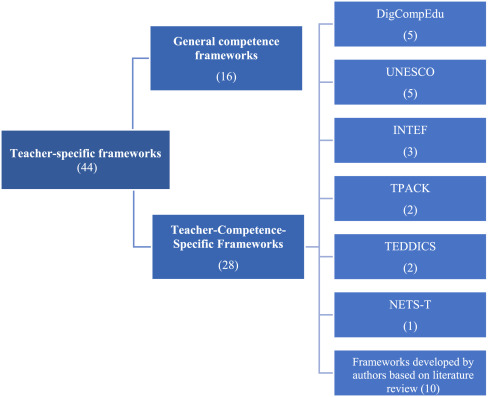
A Typology of Teacher-Specific Competence Frameworks. This figure categorizes the extensive body of research on teacher competencies, distinguishing between general and teacher-specific frameworks. It highlights the proliferation of numerous models (e.g., DigCompEdu, TPACK, UNESCO), indicating that while the component of teacher competence is well-studied, these frameworks often exist in isolation from a holistic systemic model adapted from Jin et al. (2020).
Conceptual Foundations: Building the Case for a New Model
Pakistan's current education system is failing, thereby setting an urgent need for a framework overhaul, particularly because its components have not aligned with the country's economic and social conditions of the 21st century (Ali et al., 2024). There is a policy and practice vacuum, with a 'captive' population of 'lost' generation students still sitting under a broken curriculum, and the reforms have not, for some reason, happened, Mansoor (2019). Certainly, much, if not all, of this 'broken' truth is experienced in the country's moribund vocational 'ecosystem' that, moribund as it is, bequeaths a pedagogy that outcasts the value of inclusive education to complex critical and applied reasoning (Ali, aa, 2024). Besides poor governance and the cross-institute bureaucratic failure of cooperation, the systems implosion sees students of the lower and marginalized types with the capabilities for economic and social engagement, which the day demands. This sick need for 'stomach' repairs suggests that a revolutionary change in the gears of the system is required.
For finding solutions, it is easy to look to other countries with various systems of skill development. These foreign systems, however, are more useful for inspiration than for straight copying. Germany's dual-VET system is admired for the smooth integration of training and VET to the level of a foreign industry, but is still based on an antiquated system of apprenticeships and is strong with industrial partnership, which, unfortunately, is not the economic conditions of Pakistan (Ali et al, 2024). The same goes for Finland. In order to offer success, it has to grant autonomy to a greater degree to the learners and the educators, along with sustained investments over prolonged periods on the training of the teachers, which is something Pakistan is unable to do (Ahmed et al, 2022). These models still maintain the same core principles, but trying to impose them in a different context is futile.
This means one very important thing: Pakistan needs to develop a model suited to its realities, along with tested educational theories, and not an outsourced one (Mansoor, 2019).
To be effective and long-lasting, a model like this would require proven learning theory to be fully integrated. Integrated skill-based education includes a three-part theory to justify all of its central pieces. First is Kolb's theory of experiential learning. Kolb's philosophy states that real learning is a pivot around a cycle of, not just a sequence of, concrete experience, reflective observation, abstract conceptualization, and active experimentation. This principle justifies the emphasis of the ISEF on doing workshops, internships, and other real-world activities as indispensable features of the learning process. Second is the first theory of constructivism argues that learning is centered on the learner as an active builder of their own knowledge instead of a passive recipient. This lens justifies the move to project-based learning in which students engage in higher-order thinking and problem-solving around real-world, innovative challenges. Lastly, the entire framework is based on the theory of human capital to justify its economic value.
The investment in skills-based education is framed not as a cost but rather as a national investment in the productivity, creativity, and income-generating potential of its people - who are themselves the drivers of economic and social development (Dewra, 2025). Based on these correlated principles, the ISEF is a context-sensitive, conceptually sound...and, at its core, critically necessary framework to redress Pakistan's skill-education imbalance.
The Integrated Skill-Based Educational Framework (ISEF): A Systemic Model
Barriers to Competence- Education in Pakistan is not in silos; they are interlinked and systematic. Attempting to alter the curriculum and re-educate the teachers themselves will not happen independently, so there needs to be an overarching answer to this. Figure 1: The ISEF in Part A of the diagram illustrates such an answer. And this is a "model" and not a "gimmick" because this is the theoretical consequence of one of the first large-scale, mixed-method empirical studies. The present study was carried out on a sample of 19 public higher secondary schools of Punjab. Its structure was developed systematically based on an extensive, rigorous empirical research study. The framework is developed through a triangulation of the results of the 384 students' questionnaire with the results of qualitative research (284 teachers' interviews, focus group discussions, and school observation triangulation). The analyses demonstrated numerous depths to the data, adding to the depth of the structure of the framework. ISEF is founded on four core, but conceptually separate, pillars that together constitute a rich and interconnected environment for the seamless embedding of skills-based teaching.
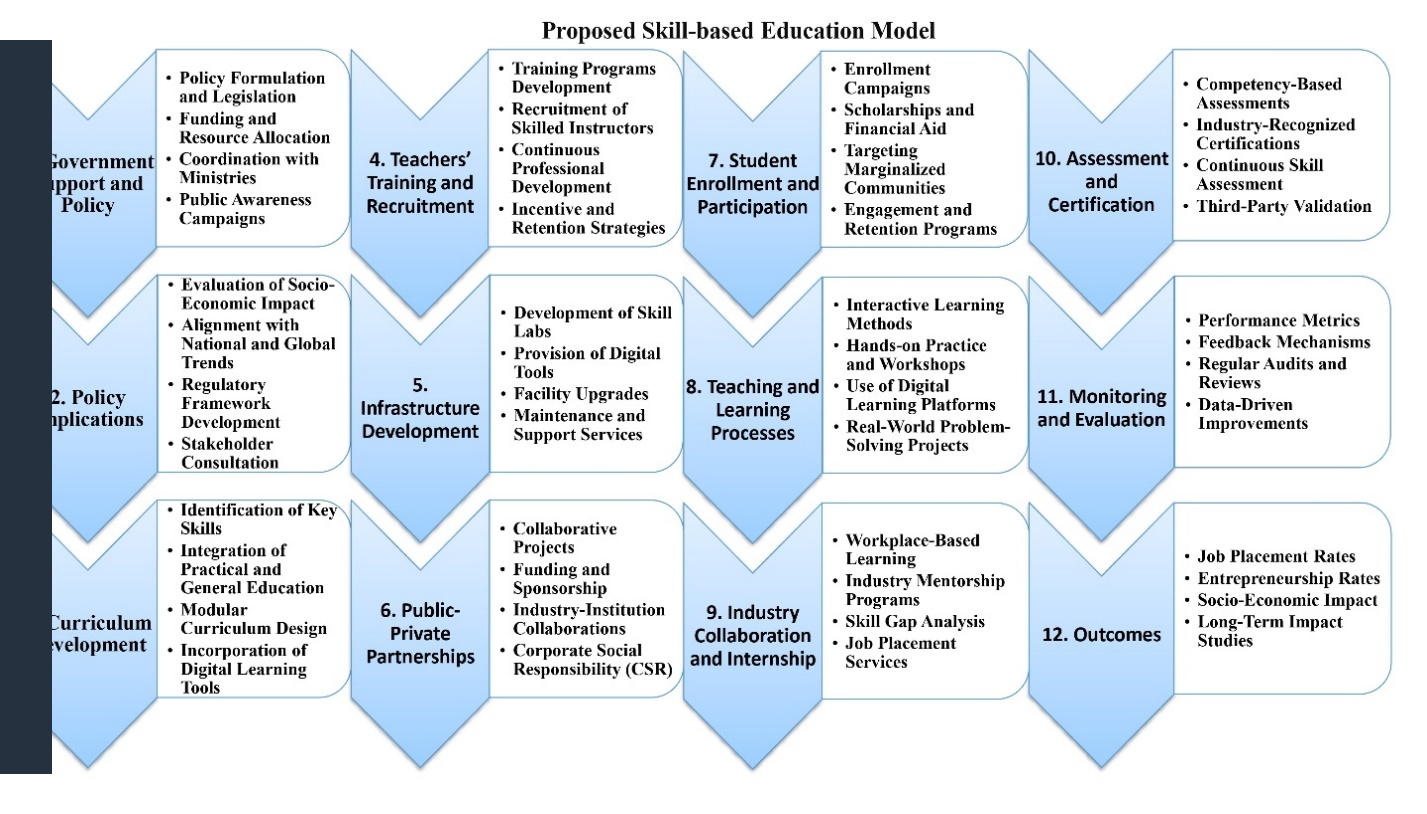
Pillar 1: The Foundational Framework
This part formulates the strategy upon which the entire system rests. It is more than just business as usual; it is business built on a combination of government will, curriculum intelligence, and a sustainable partnership model that shapes a 'lost' ecosystem. Understaffing is costly ... in more ways than one, and the Division of Vocational and Technology Education must know that. Lindley (2023) is a proponent of competency-based training for management and supervisory personnel because even technical and managerial positions are, in the long run, best cast as a sense of value. And students with different levels of educational experience pay a shrill price when they fall out, they waste years of otherwise productive time, and incur an opportunity cost, which is a lack of productive learning path and personal support. Dexter (2023) argues that the Framework, Technology, and Skilled Training in a Digital Economy have components that serve to address these gaps in an integrated manner, and that the system is targeted to the unique profiles of the different learners to enable the learners to customize the system to serve their goals.
Pillar 2: The Implementation Engine
When we talk about when the groundwork is perfected, then an appropriate policy machinery to be used for operationalization is offered in the second twin. This is based on the development of modern, sustainable education infrastructure, empowering teachers, and building deep, strategic partnerships. Closing the teacher preparedness gap outlined in our research employs a doubly headed strategy - industrially experienced skilled practitioners are positioned as teachers (Siddiqui et al., 2021) and a rigorously professionally qualifying in-service teacher development program is ensured that is reinforced by practice based pedagogy and innovative industry 'externship' approaches that raise the relevance and effect of teaching and learning (Bowen & Shume, 2018, 2020). Even the kind of practice and infrastructure professionals desire is sorely missing. This section also covers investments in technical and vocational education, digital tools, and other infrastructural upgrades, skill labs (Ali et al., 2024). Finally, this pillar applies the carefully developed PPPs through productive workplace learning and structured internships to ensure successful transfer from learning in class to working life (Bano, 2008; Nawab, 2011). The rest of the explanation includes a persistent skill "gap analysis" to keep the educational outcomes pertinent to the market needs (Mirza et al., 2014; Rizwan et al., 2018; Abbasi et al., 2018).
Pillar 3: The Learners' Journey and Learning Process
Transforming the students' journey from passive recipients of knowledge to active participants who can demonstrate mastery comes with challenges of its own. The primary activity focuses on implementing proactive enrolment drives and scholarships aimed at providing affirmative access to students from socially disadvantaged backgrounds. This section is about the teaching of all these students differently. The ISEF Approach emphasizes activity and hence the learning-by-doing methodology with workshops and real-life, problem-solving projects. Instead of theory lectures, students are on the whole more effective with the new model of instruction termed inequitably Constructive Active Learning. Students' learning is then authenticated with a new set of modern examinations. Traditional assessment methods have now been softened by competency-based frameworks, designed especially to enable students to demonstrate what they can do, instead of what they can remember.
This practical observation of specialist competencies guarantees that the qualifications are endorsed externally, provided that the relevant certificates are awarded recognition by industry bodies, and where possible, attested by a practitioner of a relevant profession (Pasha et al., 2019; Rizwan & Sohail, 2024).
Pillar 4: The Performance & Impact Loop
The last pillar guarantees that the ISEF is much more than merely a design that can remain static - it is a design that is dynamic and is continuously evolving. It establishes a feedback loop for self-improvement, which the system uses to gain self-augmentation. This is done through a sophisticated M&E system that sets targets and automates M&E feedback for all parties (Mehmood et al. 2021 and Naz et al. 2024). The policy framework is finally measured by the results it delivers: the job placements, the amount of new business opportunities, and the objectives of the socio‐economic impact that the system can attain in the long term across specific evaluations (Mensah‐Williams & Derera, 2023). The information that arises from M&E is then channeled back into the policy system. The framework will only work if policy is also transparent, accountable, and effective, such that policy can get updated as evidence, real-world interventions, and results occur (Alyas et al., 2024).
Discussion
The Integration Skill Education Framework (ISEF) is an innovation that moves away from the fragmented and poorly funded approaches that have defined skill-based education in Pakistan. While all other approaches have tended to treat skill-based education in Pakistan from the proverbial 'piecemeal' perspective, ISEF, in contrast to other approaches, relies on evidence and is conceived as an open system. Each subsystem is designed to complement the other. Monodisciplinary approaches to problem-solving can, in some cases, become counterproductive. ISEF understands the need to triage and approach problems in a holistic and simplified manner. For instance, the problem of the 'lack of resources' is not a simple problem and therefore cannot be solved with a singular action, but with a triad of actions: public investment (Component 1), public-private cooperation on resource sharing (Component 6), and targeted investment in facilities (Component 5).
Advancing the Scholarly Conversation
The originality of the ISEF lies not in inventing wholly new concepts, but in its deliberate synthesis and contextualization of proven best practices into a cohesive framework tailored to the Pakistani public-school context. Previous scholarly work has rightly called for more holistic, empirically-grounded models for vocational education in the region (Razzaq & Forde, 2013 & 2014). However, such calls have often remained at a high level of abstraction. The ISEF directly answers this call by providing a detailed, multi-layered, and actionable architecture built from firsthand, multi-stakeholder data. It thus moves the conversation from what is needed to how it can be systematically achieved.
Anticipating Challenges and Enabling Factors
While the framework is comprehensive, its implementation will undoubtedly face significant barriers. These include the deep-rooted bureaucratic inertia and potential resistance from educators accustomed to traditional pedagogy, both of which are well-documented challenges in the literature on educational change (Nazir, 2014; Khalid & Qazi, 2015). Successfully navigating this will require more than a well-designed model; it will demand sustained political will, effective change management programs for educators, and clear, tangible incentives for industry partners. The implementation roadmap, which emphasizes collaborative and participatory approaches, is designed specifically to mitigate these resistances by fostering a sense of shared ownership among all stakeholders (Farahani, 2024).
Implications for Policy and Practice
The implications of this framework are both profound and practical. For policymakers, the ISEF offers a clear, evidence-based alternative to ad-hoc, reactive reforms. It provides a structured guide for long-term investment in curriculum, teacher development, and infrastructure. For school administrators and educators, it provides a vision for pedagogical transformation, shifting their role from transmitters of information to facilitators of applied learning. For the industry, it offers a formal mechanism to move from being passive critics of the education system to active partners in shaping their future workforce.
Limitations and Future Research
This study, while comprehensive in its mixed-methods approach, has its limitations. The framework was developed based on data from public higher secondary schools in Punjab, and its applicability to private sector institutions or other provinces in Pakistan would require further investigation. Furthermore, this paper proposes a model; its real-world efficacy can only be determined through implementation. Future research should focus on piloting the ISEF in a controlled cluster of schools. A longitudinal study tracking the employment outcomes and career trajectories of students who graduate from an ISEF-based program would provide the ultimate validation of its impact.
Conclusion
Because the difference between what Pakistan's youth know and what the 21st-century economy demands is not just an educational problem, it is the single biggest obstacle to Pakistan's future prosperity. This paper has asserted that after decades of atomized, under-resourced, and reactive reforms, this gulf is simply too wide to span. In reaction, we graduated from identifying the problem to designing a solution: The Integrated Skill-Based Education Framework (ISEF).
The ISEF is not a new top-down policy blueprint or a disparate series of best practices. It's an integrated system, an evidence-based guiding path that has been constructed systematically, from the ground up, based on the lived experiences of several hundred students and educators working at the coalface of Pakistan's public education system. By seamlessly interconnecting pillars of government policy and curriculum alchemy with the transformative engine of teacher development and serious industry partnerships, the framework provides a comprehensive and practical approach to true metamorphosis. Its embedded nature guarantees the student becomes a master in the skill, leading to qualifications that are of value and relevance to the emergent economy.
The road to reform is certainly not easy; it requires consistent political courage, the dismantling of the bureaucracy that has settled into our education, and an era of trust and collaboration between the school and business worlds. But the price of inaction is a generation of young people denied the opportunity to reach their potential. The ISEF offers such a solid, credible roadmap. By adopting this systemic, empirically warranted approach, Pakistan now has the chance to at last convert its hitherto largely squandered demographic potential into a real dividend - enabling its youth to not just take part in the future economy, but help shape it.
Conflict of Interest Statement
The author declares that he has no conflicts of interest regarding this study.
Funding
There is no funding for this study.
References
- Abbasi, F. K., Ali, A., & Bibi, N. (2018). Analysis of skill gap for business graduates: Managerial perspective from the banking industry. Education + Training, 60(4), 354–367. https://doi.org/10.1108/ET-08-2017-0120
- Ahmed, Z., Alwi, S. K. K., & Akhtar, R. N. (2022). Implementation of competency based education through blended learning approach in TVET sector of Pakistan: Critical analysis using literature review. Pakistan Journal of Humanities and Social Sciences, 10(4), 1461–1471. http://dx.doi.org/10.52131/pjhss.2022.1004.0304
- Ali, W., Rahman, A., & Karsidi, R. (2024). Sustainable skill development in Pakistan: Bridging gaps in vocational and technical education policy–A systematic literature review. Society, 12(2), 656–673. https://societyfisipubb.id/index.php/society/article/view/734
- Alyas, T., Almansour, B. Y., Tabassum, N., Almansour, A. Y., & Azhar, A. (2024, December). Enhancing governance in Pakistan through e-government: The role of evidence-based monitoring systems. In 2024 International Conference on Decision Aid Sciences and Applications (DASA) (pp. 1–10). IEEE. http://dx.doi.org/10.1109/DASA63652.2024.10836172
- Asad, M. M., Basit, A., Churi, P., & Almusharraf, N. (2024). Lifelong learning paradigm and socioeconomic sustainability: Towards employment growth of vocational trainers in Pakistan. Education + Training, 66(9), 1262–1275. https://doi.org/10.1108/ET-11-2023-0461
- Bano, M. (2008). Public-private partnerships (PPPs) as ‘anchor’ of educational reforms: Lessons from Pakistan. Background paper prepared for the Education for All Global Monitoring Report 2009. http://ece.m.itacec.org/document/sindh_public_private_partnership/learning_resources/Bano%20..%202008%20World%20bank.pdf
- Bowen, B., & Shume, T. (2018). Educators in industry: An exploratory study to determine how teacher externships influence K-12 classroom practices. Journal of STEM Education, 19(1). https://www.learntechlib.org/d/182947/
- Dagore, A., & Singh, N. (2025). Effectiveness of competency-based education on student academic performance. International Journal for Multidisciplinary Research. https://ijmr.org.in/issue/effectiveness-of-competency-based-education-on-student-academic-performance
- Dewra, D. S. (2025). Innovative approaches in modern education: Bridging theory and practice. International Journal of Scientific Research in Engineering and Management. https://ijsrem.com/download/innovative-approaches-in-modern-education-bridging-theory-and-practice
- Farahani, F. M. (2024). Challenges and barriers to implementing collaborative governance for linking education and industry. Management Strategies and Engineering Sciences, 6(3), 164–173. http://msesj.com:8092/index.php/mses/article/view/108
- Hauser, A. (2016). Looking under the hood of competency-based education: The relationship between competency-based education practices and students' learning skills, behaviors, and dispositions. American Institutes for Research. https://ir.westcliff.edu/wp-content/uploads/2020/01/Looking-Under-the-Hood-of-Competency-Based-Education.pdf
- Jacobs, J. (2019). Client‐based project work as experiential education. Design Management Review, 30(1), 46–54. https://doi.org/10.1111/drev.12161
- Jin, J., Hwang, K. E., & Kim, I. (2020). A study on the constructivism learning method for BIM/IPD collaboration education. Applied Sciences, 10(15), 5169. https://doi.org/10.3390/app10155169
- Khalid, A., & Qazi, S. (2015, June). Challenges and potential of teaching engineering students in developing countries using new trends and methodologies. 2015 ASEE Annual Conference & Exposition (pp. 26.337.1–26.337.10). ASEE. https://peer.asee.org/23676
- Mehmood, K., Bangash, A. H., & Awan, K. (2021). Effectiveness of monitoring and evaluation system in context of continuous professional development of secondary school teachers as a national professional standard for teachers in Pakistan. Research Journal of Social Sciences and Economics Review, 2(2), 288–294. https://doi.org/10.36902/rjsser-vol2-iss2-2021(288-294)
- Mensah-Williams, E., & Derera, E. (2023). Conceptualising impact measurements of entrepreneurship education outcomes: A scoping review. Acta Commercii – Independent Research Journal in the Management Sciences, 23(1), a1053. https://doi.org/10.4102/ac.v23i1.1053
- Miliou, O., Adamou, M., Mavri, A., & Ioannou, A. (2024). An exploratory case study of the use of a digital self-assessment tool of 21st-century skills in makerspace contexts. Educational Technology Research and Development, 72(1), 239–260. https://doi.org/10.1007/s11423-023-10314-0
- Mirza, F. M., Jaffri, A. A., & Hashmi, M. S. (2014). An assessment of industrial employment skill gaps among university graduates: In the Gujrat-Sialkot-Gujranwala industrial cluster, Pakistan. International Food Policy Research Institute. https://books.google.com/books?id=P5pvAwAAQBAJ
- Nawab, A. (2011). Workplace learning in Pakistani schools: A myth or reality? Journal of Workplace Learning, 23(7), 421–434. https://doi.org/10.1108/13665621111162954
- Naz, L. H., Zafar, J. M., & Ullah, N. (2024). Effectiveness of monitoring and evaluation system in improving educational facilities at secondary school level in Punjab (Pakistan). Journal of Asian Development Studies, 13(3), 175–191. https://poverty.com.pk/index.php/Journal/article/view/679
- Nazir, M. (2014). Democracy and education in Pakistan. In T. Griffiths & Z. Millei (Eds.), Education and global justice (pp. 79–92). Routledge. http://dx.doi.org/10.1080/00131911.2010.503604
- Ofei-Manu, P., & Didham, R. J. (2018). Identifying the factors for sustainability learning performance. Journal of Cleaner Production, 198, 1173–1184.
- Pasha, A., Pinjani, A., Bijani, A., & Yousuf, N. (2019). Challenges of developing competencies in students in developing contexts. Literacy Information and Computer Education Journal (LICEJ), 10(4), 3293–3298.
- Rahman, F., Khan, F. U., Rahman, Z., & Ahmad, W. (2021). Contemporary education system and Islamic state: Reflections from Indo-Pakistan. Humanities & Social Sciences Reviews, 9(3), 1733–1738. http://dx.doi.org/10.18510/hssr.2021.93176
- Razzaq, J., & Forde, C. (2013). The impact of educational change on school leaders: Experiences of Pakistani school leaders. Educational Management Administration & Leadership, 41(1), 63-78. http://dx.doi.org/10.1177/1741143212462698
- Rizwan, A., Demirbas, A., Hafiz, N. A. S., & Manzoor, U. (2018). Analysis of perception gap between employers and fresh engineering graduates about employability skills: A case study of Pakistan. International Journal of Engineering Education, 34(1), 248–255. https://www.researchgate.net/publication/323588485
- Rizwan, S., & Sohail, F. (2024). Skill-based education in an industrial city of Pakistan. VFAST Transactions on Education and Social Sciences, 12(2), 1–10. https://www.vfast.org/journals/index.php/VTESS/article/view/1848
- Safdar, S., Basit, I., & Anis, F. (2024). Mapping the landscape of inclusion: A multidimensional conceptual framework for inclusive education in Pakistan. The Critical Review of Social Sciences Studies, 2(2), 527–529. http://thecrsss.com/index.php/Journal/article/view/55
- Siddiqui, K. A., Mughal, S. H., Soomro, I. A., & Dool, M. A. (2021). Teacher training in Pakistan: Overview of challenges and their suggested solutions. IJORER: International Journal of Recent Educational Research, 2(2), 215–223. https://journal.ia-education.com/index.php/ijorer/article/view/91
- Sistermans, I. J. (2020). Integrating competency-based education with a case-based or problem-based learning approach in online health sciences. Asia Pacific Education Review, 21(4), 683–696. https://doi.org/10.1007/s12564-020-09658-6
- Søreide, G. E., Riese, H., & Hilt, L. T. (2021). 21st-Century skills and current Nordic educational reforms. In Oxford research encyclopedia of education. Oxford University Press. https://doi.org/10.1093/acrefore/9780190264093.013.1658
- Zaman, D., Asif, U., Nawaz, A., & Khan, A. (2024). Advocating problem-based learning in physiotherapy education in Pakistan: PBL in physiotherapy education. Allied Medical Research Journal, 2(2), 4–7. https://doi.org/10.59564/amrj/02.02/002
Cite this article
-
APA : Rafiq-uz-Zaman, M. (2025). The Integrated Skill-Based Education Framework (ISEF): An Empirically Grounded Model for Reforming Skill-Based Education in Pakistan. Global Social Sciences Review, X(III), 157-167. https://doi.org/10.31703/gssr.2025(X-III).14
-
CHICAGO : Rafiq-uz-Zaman, Muhammad. 2025. "The Integrated Skill-Based Education Framework (ISEF): An Empirically Grounded Model for Reforming Skill-Based Education in Pakistan." Global Social Sciences Review, X (III): 157-167 doi: 10.31703/gssr.2025(X-III).14
-
HARVARD : RAFIQ-UZ-ZAMAN, M. 2025. The Integrated Skill-Based Education Framework (ISEF): An Empirically Grounded Model for Reforming Skill-Based Education in Pakistan. Global Social Sciences Review, X, 157-167.
-
MHRA : Rafiq-uz-Zaman, Muhammad. 2025. "The Integrated Skill-Based Education Framework (ISEF): An Empirically Grounded Model for Reforming Skill-Based Education in Pakistan." Global Social Sciences Review, X: 157-167
-
MLA : Rafiq-uz-Zaman, Muhammad. "The Integrated Skill-Based Education Framework (ISEF): An Empirically Grounded Model for Reforming Skill-Based Education in Pakistan." Global Social Sciences Review, X.III (2025): 157-167 Print.
-
OXFORD : Rafiq-uz-Zaman, Muhammad (2025), "The Integrated Skill-Based Education Framework (ISEF): An Empirically Grounded Model for Reforming Skill-Based Education in Pakistan", Global Social Sciences Review, X (III), 157-167
-
TURABIAN : Rafiq-uz-Zaman, Muhammad. "The Integrated Skill-Based Education Framework (ISEF): An Empirically Grounded Model for Reforming Skill-Based Education in Pakistan." Global Social Sciences Review X, no. III (2025): 157-167. https://doi.org/10.31703/gssr.2025(X-III).14