
- What are the effects of digital storytelling on students' vocabulary development and creativity in English?
- What is the impact of digital storytelling on the motivation of students to use English creatively?
- How does digital storytelling enhance writing and speaking amongst young people?
- What are the challenges associated with the digitized storytelling tools among students learning English?
Abstract
This paper investigates the impact of digital storytelling on the creativity of English language among undergraduate EFL learners in the digital age. It adopts a mixed-methods, quasi-experimental design with an experimental group and a control group to assess the effectiveness of this method. Data were collected through pretests, post-tests, questionnaires, interviews, and classroom observations. The results indicate improvements in vocabulary, fluency, creativity, and overall language among students instructed using this approach, compared with their peers receiving traditional instruction. Motivation, confidence, engagement, collaboration, and critical thinking also improved through digital storytelling among learners. Despite some technological challenges, the general findings suggest that digital storytelling is a powerful and pioneering tool for English language learning. The study suggests incorporating digital narratives into language learning to foster creativity and interest among undergraduate EFL learners.
Keywords
Prompting, Language Creativity, Digital Storytelling, Motivation, Multimedia Platforms
Introduction
R
ecently, use of digital technology had influenced all facets of contemporary living, especially in how the undergraduate students converse, acquire knowledge and express themselves. The 21st century undergraduate students are highly engaged with digital culture through social media, multimedia platforms and online communication tools, which are shaping daily interactions. Through this, the conventional approaches to teaching English language are not applicable enough to captivate learners completely and realize their creative potential. Teachers are increasingly turning to new methods of teaching based on digital technology that are fulfilling and inspiring the students of modern times. A digital story telling is also one of those methods which has attracted great interest over the last few years. Digital stories are interactive and engaging narratives whereby the art of storytelling is joined by digital tools (images, audio, video clips, animation, and music) and so on. This integrated approach does not only enhance language, but promotes creativity, group work, and critical thinking in young learners. Digital storytelling, which is an innovative method which uses images, audio, video, animation, and music to narrate the stories and make it meaningful, is another effective approach that has been gaining much attention recently ( Robin, 2021; Sadik, 2020; Yang & Wu, 2021; Hafner & Miller, 2022; Kim, 2023).
The value of digital storytelling as a method of nurturing young people to be creative in the English language is especially critical as it enhances interactivity and improves the expression. Digital storytelling is a form of writing that is not like traditional writing activities where the student might have been confined to using the textbook to answer the prompt but can now be used to form his or her own stories about knowledge, imagination, or societal issues. Through this process, students get to practice with language, express new vocabulary in creative and meaningful ways, and put ideas together in an original and creative manner. They plan, write, edit, and produce their digital stories. Naturally, learners develop fluency in their writing, grammatical correctness, and have their organization. Moreover, voice record and telling stories enhance pronunciation, confidence in speech, and general competence of communication. Through this, digital storytelling can assist in all four language skills, listening, speaking, reading, and writing in the context of creativity. Furthermore, digital narratives encourage higher-order thinking abilities that are vital in being creative. While creating a digital story, a student needs to process information, synthesize, solve challenges associated with design and presentation, and assess the success of his or her message. Such mental activities evoke fantasy and novelty that form important elements of creative speech. Integration of multimedia also attracts different styles and makes learning the language more inclusive and appealing. The prospect of teachers by allowing young learners to use technology in the classroom becomes a motivating factor, decreasing the level of anxiety especially in speaking English. It also provides a positive atmosphere in which students are sure to express their ideas. On top of that, online storytelling promotes and socializes collaboration and interaction. They place their youngsters in teams where they brainstorm and create stories, thus developing peer learning and communication. Students share feedback, negotiate meaning, and perfect language use through collaboration. This interactive process enhances their capacity to be creative with the English language in real-life situations. Digital stories are a way of digital literacy in an age when knowledge of technology is equal to linguistic proficiency; they also provide learners with necessary technological skills that are useful outside the classroom. It is observed that students tend to find the digital environment more comfortable for conveying information and this increases students' confidence and motivates them to participate in language study ( Lim & Noor, 2021; Choi & Yi, 2022).
Thus, it is timely and relevant to explore the importance of digital stories in the development of English language creativity in the undergraduate students. With a constantly evolving field of education as new technologies are introduced, the role of digital storytelling in building creative language usage may be of value to teachers, curriculum developers and policymakers. With the integration of storytelling and digital technologies, teachers can develop active learning spaces that develop not only language proficiency, but also creativity so young learners can function in the globalized world proficiently and creatively.
Research questions
There are the following research questions of the present study
Significance of the study
The research is also important as it seeks to understand the potential of digital storytelling in increasing creativity of the English language among undergraduate EFL learners in the contemporary digital age. The study underlines the use of digital storytelling as a new pedagogical approach for supporting students' creative writing, communicative confidence in speaking, learning and retention of key vocabulary, and construction of meaningful expressions .With the increasing changes in how students of different languages relate to technology, there is a need to integrate digital tools into learning a particular language. This study is important in showcasing how digital storytelling may be used as a new method of teaching to enhance creative writing and speaking and language expression in English.
The research results of this study are useful to learners, educators, and curriculum developers. In the case of students, it can enhance motivation, confidence and interest in creative use of English. To teachers, it offers information on what can work in digital teaching and learning that can make language learning interactive and more helpful. Curriculum designers can apply the results to implement digital storytelling in English language education.
With this, current research adds to the current body of literature by narrowing down on undergraduate students innovation in English learning which is the area of research that lacks empirical data. Thus, the present study could serve as a useful foundation for any future researchers who are interested in digital pedagogy, creative language development, and approaches that can be included with the use of multimedia. It can also inform other future researchers interested in the field of technology-based language learning and developing a creative ability.
Delimitations
The research is delimited to the discussion of the use of digital storytelling in encouraging the undergraduate students to use English language creatively. It considers students only at secondary or undergraduate level and excludes children in primary schools and adult students. The study is defined to English language learning setting and doesn't further explore digital storytelling in other instructional content areas such as other subject areas. The study is limited to English language learning settings but not the role of digital storytelling on other subjects. Also, the research narrowly explores the creativity concerning writing and speaking skills, as opposed to reading or listening skills in particular.
It may also not be able to conduct the study in all the institutions in certain geographical regions which could restrict the generalizability of the results. Moreover, not all possible digital technologies are considered, and only some digital storytelling tools and platforms are analyzed. The scope of the results can also be impacted by time constraints and sample size constraints.
Literature Review
The topic of incorporation of technology in language education has received much popularity among language educators. English Language Teaching (ELT) is mostly in the larger context of Computer Assisted Language Learning (CALL). As digital tools are quickly developing, teachers have turned to developing innovative practices that involve the integration of language teaching with multimedia products. Depending on the specific task, the learning materials, and the resources available, digital storytelling can be completed using various media, including illustrations, pictures, audio recordings, short videos, and text, that can transmit experiences that have meaning to the creator and desired by the audience. (Lambert, 2020). Of these methods, digital storytelling has become an effective pedagogical means that results in the improvement of linguistic competence and creativity. This literature review will focus on existing studies on digital storytelling, its theoretical principles, role on the creativity of English language, and issues surrounding its use among the youth.
Digital storytelling has its origins in the old standard of storytelling that has traditionally been seen as a natural and significant language acquisition process. Storytelling promotes arrangement of ideas, display of feelings, and sharing of experiences in an organized manner. According to Robin B.R. (2008), digital stories involve using multimedia equipment to develop short and interesting tales that could help in enhancing learning processes. From his point of view, digital storytelling offers a dynamic platform that enables students to build knowledge actively instead of passively receiving information.
Similarly, Lambert, J. In the research (2013), digital storytelling was described as a personal and reflective phenomenon as it empowers people to tell important stories using digital media. As Lambert emphasizes, storytelling will empower the voices of learners in a combination with technology, as well as promote authentic self-expression among learners. Such viewpoints raise the notion that digital storytelling is not an exhibition of a technological hype, but rather a model that is learner-centered; based on the constructivist theory. Constructivism assumes that a learner constructs knowledge in terms of active learning and meaningful experiences and digital storytelling fits into this theoretical category perfectly, as it provides students an opportunity to create, reflect, and revise their stories.
A significant amount of research shows that digital storytelling promotes the acquisition of fundamental language skills. Research indicates that digital story planning, scripting, revision, and presentation are processes that aid in the improvement of writing skills. Students should be able to use vocabulary correctly, arrange their ideas in a logical way, and use grammatical constructions. Moreover, voiceovers and reading out stories help to enhance better pronunciation, fluency and confidence in speaking.
Yang, Y. T. C. And Wu, W. C. I. The experimental study by (2012) has proven that digital stories telling can greatly enhance the academic and critical thinking and the motivation of students to learn. They found that English language tasks achieved higher in students who participated in digital storytelling activities as compared to those who used traditional ways of instructional activities. Integrating multimedia with understanding/active involvement with contents does not only enhance understanding but also triggers involvement, research notes. Moreover, scholars declare that digital storytelling leads to the development of integrated skills. By reading scripts, listening to peer comments, writing the story and speaking at a presentation, learners can practice all four language skills: listening, speaking, reading and writing. Such a holistic methodology lies close to communicative language teaching (CLT), where meaningful communication is promoted rather than single grammars exercises. Consequently, the concept of digital storytelling has a direct implication of a specific application of communicative principles in classrooms that are technologically enhanced.
Language learning is considered creative when one can develop original ideas, use expressions of imagination, and express ideas in novel ways. Classroom activities can be restrictive as students are accustomed to structured classroom work that can be limited to the creativity of the student. On the contrary, digital stories prompt learners to own their stories and play with words. According to scholars, digital storytelling, in its multimedia aspect, encourages creativity and innovativeness. By integrating images, background music, animation, and voice narration, students are involved in a variety of expressions. This multi-modal learning space promotes multiple styles of learning and enables creative thinking.
Research Methodology
The research design used in the study is mixed methods because it explores the use of digital storytelling with two groups; an experimental group and a control group. Unveiling the experimental group to digital storytelling activities is compared to the control group that keeps learning using conventional teaching methods. Both groups are pre-test and posttest to gauge changes in creativity of the language of English. This design helps in identifying the effectiveness of digital storytelling as an instructional tool.
Digital storytelling is an effective teaching approach in today's classrooms as it integrates elements of storytelling with digital platforms such as photographs, audio, and video. It teaches students to better express their ideas by structuring them, using suitable language, and creatively connecting these ideas. Increased student engagement and 21st century learning are achieved through critical thinking, communication, and creativity with the use of digital story telling (Robin, 2008). It's also a successful approach for teaching the English language to young people.
Ethical considerations
During the research process, ethical guidelines are adhered to. Participants give informed consent and are guaranteed that participation is voluntary. The participants remain anonymous, and their data are held in confidence, and the data were collected with the sole aim of academic use. The participants are also provided with the privilege to pull out of the study at any point without any repercussions.
Procedure
The sample of the studied group includes about 15 to 25 students that are chosen in one of the university. The age of the participants is between 18-22 years, and they are learners of English as a second language. Access and time limitations lead to the use of convenience sampling techniques. On the one hand, the participants are divided into equal numbers (experimental group and control group) to be balanced and similar.
Data Collection Instruments
Per-test and post-test
An English language test in the form of creativity is given prior to and after the intervention. The test has activities like writing stories, describing paragraphs, and constructing short stories. These exercises help to evaluate the originality, vocabulary, coherence, and fluency of students. Ware (2006) discusses the importance of having multiple opportunities for writing and communicating by students. The research shows students achieve more when they are given opportunities to express their thoughts using various creative path ways as opposed to just writing. Digital storytelling helps with this by allowing learners to study writing in conjunction with multimedia. This leads to increased creativity, self-assurance and language fluency in language learning, particularly when it comes to English writing tasks.
Robin and McNeil (2012) say that teachers need to know the technical and pedagogical features of digital storytelling as this will help them implement it in their classrooms. They note that digital storytelling is an example of student-centered learning, as it enables students to engage in active knowledge creation rather than just receiving knowledge. It enhances motivation, engagement and language skills in the classroom. This approach allows teachers to support learners' development of creativity, self-confidence, and teamwork.
Observation Checklist
During the intervention period classroom observations are conducted to track student involvement, engagement, as well as innovative approach to storytelling activities.
Procedure
The research is carried out in a six week period. First, both groups undergo a pre-test that evaluated their level of English language creativity (as baseline). Subsequently, the experimental group is presented to digital storytelling tools where students make up stories by digital storytelling tools like mobile apps or presentation packages, and video editing software. They are instructed to use multimedia features such as visuals/images, voiceover, and background sound.
At the same time, the control group is also provided with the same material instructed through the traditional ways of teaching, i.e., textbook-focused tasks and written works. Both groups also give a post-test at the end of the period of intervention to assess any change in their creative language skills.
Also, questionnaires are mailing, and interviews with the chosen respondents are conducted to obtain feedback. During the process, observations are made to aid the findings.
Data Analysis
This section incorporates analysis and interpretation of data collected to investigate the role of digital storytelling in encouraging youth to develop the English language in shouldering creativity. They were collected by the use of pre-tests, post-tests, questionnaires, interviews, and classroom observations. Quantitative and qualitative approaches were employed to make sure that the results were thoroughly analyzed.
Sadik (2008) believes the digital story telling is one of the important technology integrations in learning activity which affects students learning and engagement. . It engages students in active learning, making them more active in classroom activities and encourages their use of language. Stories enhance their writing, speaking and problem-solving proficiency. The research also notes that digital storytelling engages students and makes learning a positive and rewarding experience.
The pre test scores showed no significant difference between the experimental and control groups' English language creativity before the intervention (mean = 3.8, SD = 1.0 for experimental group, mean = 3.7, SD = 1.2 for control group). This similarity helped to ensure that the study was fair and reliable.
Six weeks of instruction with a Digital Story telling activity resulted in significant post-test gains for the experimental group. The mean score went up by 107.9%, from 3.8 to 7.9. In creative language tasks, students showed improvements in their vocabulary use, creativity in ideas, level of fluency, and coherence.
The traditional instruction group, the control groups, had a slight improvement. Their mean score rose from 3.8 to 4.8; an improvement of 26.3%. Some improvement was seen but not as significant as in the experimental group.
Pretest and posttest comparison clearly shows that the use of Digital Storytelling increased students' creativity successfully in English language learning. The significant improvement in the experimental group confirms the efficacy of digital storytelling to be an innovative teaching method in improving the creativity of language of students in the undergraduate level.
Quantitative Data Analysis
Quantitative data were considered in the form of pre- and post-test scores of the experimental group and control group scores. These tests aimed at the evaluation of the creativity of students in English language in the aspects of originality, vocabulary use, coherence, and fluency.
Pre-test Analysis
A pre-test was administered prior to the intervention to check the baseline of creativity in English language among the participants. Experimental and Control Group participated in the test. It was made up of creative language assignments like story writing, picture description, creating sentences and developing short stories. The goal of the pre-test was to assess the students' command of words, originality of ideas, fluency, coherence and overall creative expression in English. A marking scheme was established and each learner marked out of 10.
Pre-test indicated both groups started the program with a similar level of English language creativity. The average score of the people in the experimental group was 3.8 out of 10, and the same was true of the people in the control group. The majority of students showed low adeptness in their vocabulary, ideas and showing originality in their answers. Finding the similarity in scores confirmed that both groups were very close in starting proficiency, which in turn would depend on the validity in determining the effect of the digital story-telling during the intervention period.
Pre-Test Results
Experimental Group = 10 Students
Control Group = 10 Students
Experimental Group (Pre-Test)
Experimental Group (Pre-Test)
| Student | Score/10 |
| Ali | 3 |
| Ahmad | 4 |
| Fatima | 3 |
| Zainab | 4 |
| Hassan | 5 |
| Ayesha | 3 |
| Bilal | 4 |
| Maryam | 3 |
| Umar | 4 |
| Hina | 5 |
Control group(pre-test)
Control group(pre-test)
| Students | Score/10 |
| Saad | 4 |
| Sana | 3 |
| Hamza | 4 |
| Iqra | 3 |
| Abdullah | 4 |
| Noor | 5 |
| Daniyal | 3 |
| Maham | 4 |
| Asad | 4 |
| Kiran | 4 |
Post-test Analysis
Both groups were given a similar set of tasks as the pre-test over after six weeks of instruction to get their post-test scores. During the intervention period, the experimental group had digital story-telling activities and the control group had more traditional teaching activities. To assess the improvement made in terms of creativity, vocabulary usage, fluency and overall English language performance of the students after the post-test.
The results of the post-test showed the improvement that was seen in the experimental group to be remarkable. Students who used digital storytelling were more creative and well organized in their responses, were more engaged.
Used a wider range of vocabulary, and were more confident and fluent with their ideas. The control group, however, made a much more modest gain. The results seem to confirm that digital storytelling had a good influence on the use of English language by students in their creative work
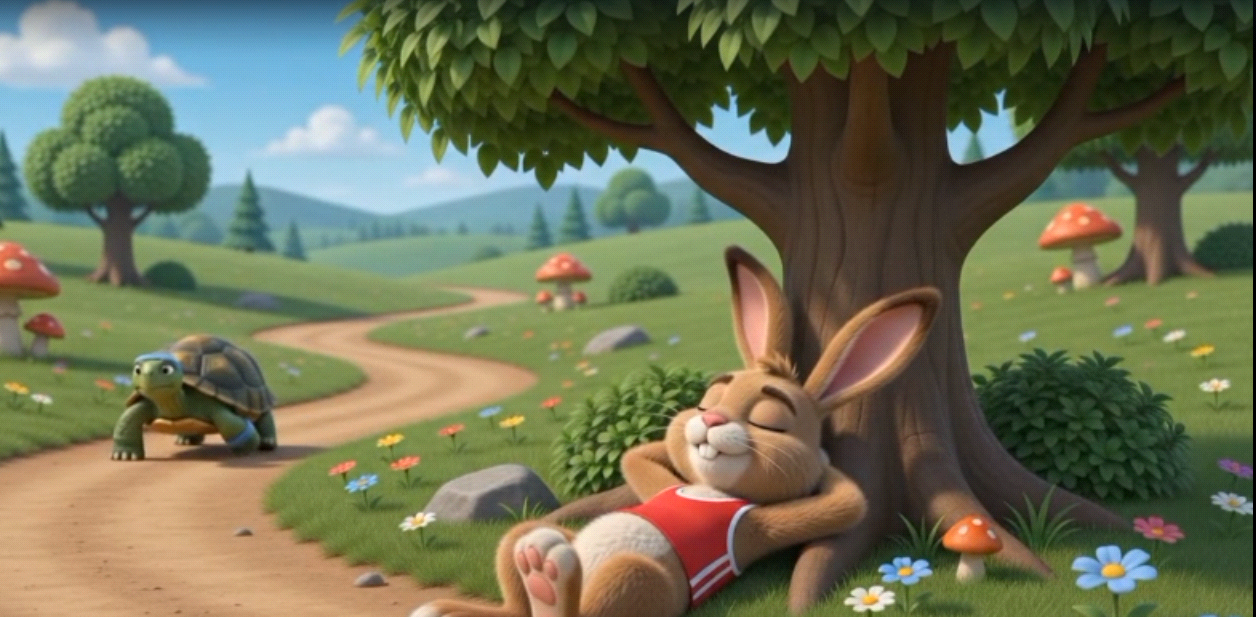
Image.1 The story of hare and tortoise
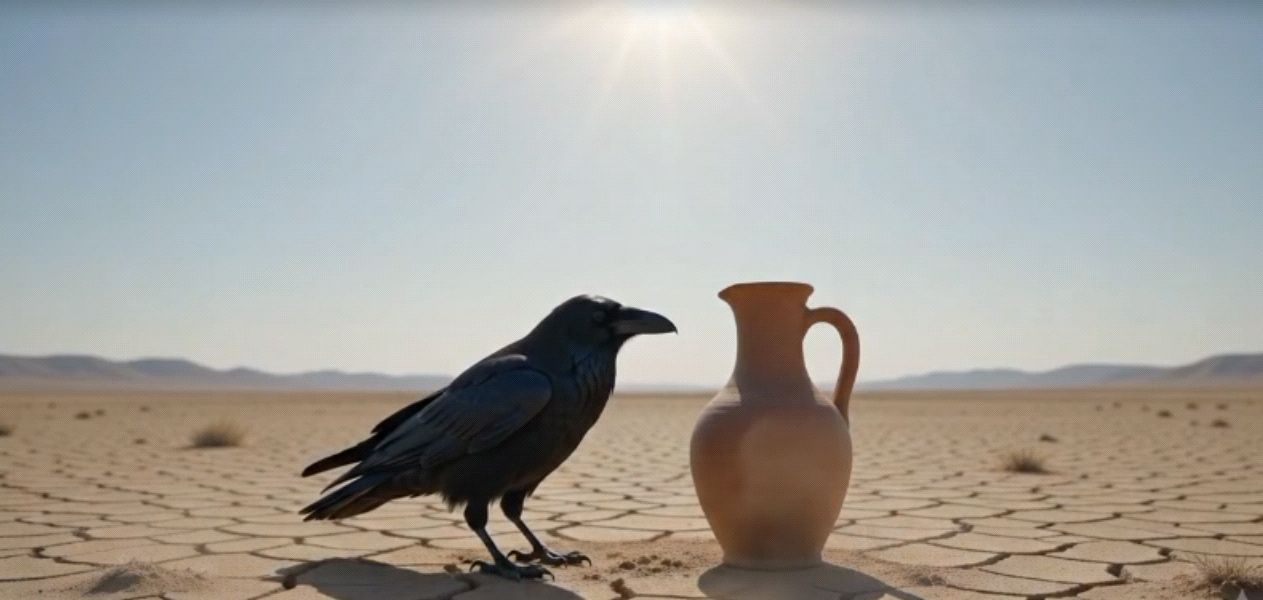
Image.2 The story of Thirsty crow

Image 3. The story of Foolish Stage
Post test results
6 weeks after intervention:
Experimental Group (Digital Storytelling)
Experimental Group (Digital Storytelling)
| Students | Score/10 |
| Ali | 8 |
| Ahmed | 8 |
| Fatima | 7 |
| Zainab | 8 |
| Hassan | 9 |
| Ayesha | 7 |
| Bilal | 8 |
| Maryam | 7 |
| Umar | 8 |
| Hina | 9 |
| Total=79 |
Mean score=7.9
Control Group (Traditional Method)
Control Group (Traditional Method)
| Students | Score/10 |
| Saad | 5 |
| Sana | 4 |
| Hamza | 5 |
| Iqra | 4 |
| Abdullah | 5 |
| Noor | 6 |
| Daniyal | 4 |
| Maham | 5 |
| Asad | 5 |
| Kiran | 5 |
Total=48
Mean Score=4.8
Percentage Improvement
Experimental Group
Pre-test Mean = 3.8
Post-test Mean = 7.9
Percentage Improvement:
= 107.9% Improvement
Control Group
Pre-test Mean = 3.8
Post-test Mean = 4.8
Percentage Improvement:
= 26.3% Improvement
Comparison of Pre-test and Post-test Results
The effectiveness of digital storytelling can be outlined in comparison to the pretest and post-test scores. The percentage increase of the scores was more in the experimental group than in the control group. This performance is an indication of how digital tales improve the capability of students to be imaginative and present their ideas using English.
The statistical analysis (mean and percentage comparison) shows clearly that students that were exposed to digital storytelling performed better than students that were taught the same topic using traditional methods. Hence, the hypothesis of digital storytelling enhancing the creativity of English language in youth is upheld by the quantitative results.
Questionnaire Analysis
The questionnaire was structured to investigate the perception of the students towards digital storytelling as a tool of learning. A Likert scale was used to semi-quantify the responses to strongly agree, strongly disagree, and show your response.
Most of the students in the experimental group were in support of using digital storytelling. They noted that this was a more interesting, interactive, and enjoyable way of learning. Most of the students (high percentage) affirmed that digital storytelling enhanced their confidence in using English particularly when undertaking speaking and writing assignments.
Furthermore, the students stated that they were able to process and systematize their thoughts better with the inclusion of multimedia elements. Another observation shared by many participants was that digital storytelling stimulated them to be more creative and expressive. They were encouraged to be actively engaged in classroom tasks and were not so scared of errors.
Besides this, few students encountered initial challenges in using digital tools because they had low technical abilities. However, with guidance and practice, they were able to overcome these challenges. In general, the findings of the questionnaire create a great persuasion in favor of the usefulness of digital storytelling in facilitating creativity and participation.
Qualitative Analysis
The qualitative data were gathered by conducting interviews and class observations. This data helped to get a better understanding of the experiences and behaviors of students throughout the learning process.
Interview Analysis
The interviews showed that the concept of digital storytelling was a pleasant, innovative way of learning by students. Most participants explained that they were more confident to express their ideas using digital tools in the English language. They also stated that using images, sounds, and text also allowed them to think more creatively, as well as to structure their thoughts better. According to some students, digital storytelling enabled them to express their personal experiences and feelings and made learning more meaningful. They enjoyed working as a team with their peers; this enhanced their communication.
Nevertheless, some students cited access to technology, and a lack of knowledge of some digital applications as difficulties. Irrespective of these problems, the majority of the participants expressed positive feelings towards the use of digital storytelling in learning languages. Digital story telling is a new type of alternative media for literacy, learning and creation for students (Ohler 2013).It enables students to express themselves and communicate with others through technology. Using written text, speaking, images and audio, learners can convey concepts in a more effective and creative way. This not only helps with language learning but also technical proficiency and effective communication, essential skills in the 21st century.
Observation Analysis
Observations in classrooms revealed that there was a lot of difference between experimental and control groups. In the experimental group, the pupils were fully engaged and took an active part, which showed more creativity. They were interested in the development of stories, the choice of multimedia elements, and the presentation of the work.
Conversely, the control group students looked less interested, and they depended on conventional modes of learning. They were comparatively less involved and had less variety in terms of creativity.
It was also observed that digital storytelling facilitated cooperation among students. They collaborated in teams, discussed, and helped one another to complete assignments. This teamwork station led to growth in both social and language skills.
Kervin and Mantei (2016) emphasize illustrations of children's involvement in literacy through digital story. They argue that students will be more engaged when they are encouraged to create and share their stories in digital media. This practice helps learners engage in the story, communicate their ideas and better understand language concepts. It also supports learners to build bridges between their experiences and tasks at school, enhancing their learning.
Enhanced Creativity
Learners were better at coming up with their own ideas and presenting them. Improved motivation and interest. The use of digital stories in storytelling made learning more engaging and participatory.
Improved Language Skills
There were an improved vocabulary use, fluency, and coherence in communication by the students.
Collaborative Learning
The use of group activities promoted a sense of teamwork and communication amongst students. These themes point to the general beneficial effect of digital storytelling on the creativity of the English language.
Findings and Conclusion
The results of this study are founded on the quantitative and qualitative analysis of data, as it will discuss the role of digital storytelling in obtaining the English language creativity among young people. To begin with, the quantitative findings in the pre-tests and post-tests demonstrated that there was a considerable improvement in the performance of the experimental group. Students involved in digital storytelling showed more creativity as compared to the control group. Their work had more originality, better use of words, better structure of ideas, and fluency. Conversely, the control group registered minimal improvements, meaning that the conventional teaching approaches were not effective in developing creativity.
Secondly, the questionnaires results revealed that students have positive attitudes towards digital storytelling. Most participants noted that this method has made learning more interesting, interactive, and fun. Students became more confident in their English language abilities to express their ideas and to be involved into classroom activities. Multimedia features (images, audio, and video) enabled them to comprehend and organize their stories in a better way.
Moreover, these outcomes were backed by qualitative data through interviews and observations. Students said that digital storytelling enabled them to be more creative in their thought process, as well as facilitate smoother communication. They also enjoyed the fact that they got to work with other students, and this increased their communication and teamwork skills. It was observed that, after the experimental group, the levels of increase in student engagement, students' active participation and increased interest in learning activities increased.
Moreover, the theme analysis determined the following key outcomes: improved creativity, motivation, language skills, development of confidence, and group learning. There were also some students who experienced difficulties in the beginning in terms of technical needs but were gradually overcome with the practice and instructions.
All in all, the results indicate a good potential of digital storytelling, as a pedagogical tool in enhancing the creativity of the English language among young people.
Conclusively, this paper shows that digital storytelling can be important in providing English language youth with creativity. Combining technology and conventional storytelling, this method will give learners an interactive and engaging medium that enables them to express their ideas in a creative and effective manner.
Study findings suggest that digital storytelling not only enhances both creative (writing) and speaking skills of students, but also boosts their motivation, confidence, and general engagement in language learning. Digital storytelling is a more dynamic and student-oriented learning process than traditional teaching uses in the learning setting, which promotes active learning and effective communication.
In addition, with the help of multimedia, students can structure their thoughts better and describe their ideas in an innovative manner. It is also helpful in the building of the vital 21stcentury competencies of critical thinking, teamwork, and digital literacy. The skills are essential to the academic and professional life of students in the contemporary world.
But the research also recognizes a number of constraints including lack of access to technology and early challenges in utilizing digital tools. Regardless of these issues, the advantages of digital storytelling on the whole surpass its shortcomings. It can be suggested based on the findings that educators should adopt the use of digital storytelling in their English language teaching to encourage creativity and engagement among students. Its potential long-term effects and its use in varying educational settings could also be the subject of future research.
References
- Ahmed, S., & Khan, R. (2023). Digital literacy and English language creativity among youth learners. International Journal of Applied Linguistics and English Literature, 11(3), 67–81.
- Choi, Y., & Yi, Y. (2022). Digital storytelling and student creativity in English language classrooms. Journal of Language and Education, 8(2), 45–59.
- Hafner, C. A., & Miller, L. (2022). Digital storytelling in language education: New perspectives on creativity and communication. Language Learning & Technology, 26(1), 78–95.
- Kervin, L., & Mantei, J. (2016). Digital storytelling: Capturing children’s participation in literacy learning. The Reading Teacher, 70(2), 187–195.
- Kim, S. H. (2023). The impact of digital storytelling on EFL learners’ motivation and speaking skills. Computer Assisted Language Learning, 36(4), 512–530.
- Lambert, J. (2013). Digital storytelling: Capturing lives, creating community (4th ed.). Routledge.
- Lambert, J. (2020). Digital storytelling: Capturing lives, creating community (5th ed.). Routledge.
- Lim, F. V., & Noor, N. M. (2021). Technology-enhanced language learning and student engagement through storytelling. International Journal of Educational Technology in Higher Education, 18(1), 1–16.
- Ohler, J. (2013). Digital storytelling in classroom: New media pathways to literacy, learning, and creativity. Corwin Press. https://doi.org/10.4135/9781452277479
- Robin, B. R. (2008). Digital storytelling: A powerful technology tool for the 21st century classroom. Theory Into Practice, 47(3), 220–228. https://doi.org/10.1080/00405840802153916
- Robin, B. R. (2021). Digital storytelling as a transformative educational technology. Theory Into Practice, 60(3), 220–230.
- Robin, B. R., & McNeil, S. G. (2012). What educators should know about teaching digital storytelling. Digital Education Review, 22, 37–51.
- Sadik, A. (2008). Digital storytelling: A meaningful technology-integrated approach for engaged student learning. Educational Technology Research and Development, 56(4), 487–506. https://link.springer.com/article/10.1007/s11423-008-9091-8
- Sadik, A. (2020). Digital storytelling: A meaningful technology-integrated approach for engaged student learning. Educational Technology Research and Development, 68(4), 1891–1912.
- Ware, P. D. (2006). From sharing time to show time: Valuing diverse venues for student writing. Language Arts, 84(1), 45–54. https://doi.org/10.58680/la20065608
- Yang, Y. T. C., & Wu, W. C. I. (2012). Digital storytelling for enhancing student academic achievement, critical thinking, and learning motivation. Computers & Education, 59(2), 339–352. https://doi.org/10.1016/j.compedu.2011.12.012
Cite this article
-
APA : Gulab, M., Irshad, L., & Rashid, A. (2026). The Role of Digital Storytelling in Prompting English Language Creativity among Undergraduate EFL Learners. Global Social Sciences Review, XI(II), 70-82. https://doi.org/10.31703/gssr.2026(XI-II).07
-
CHICAGO : Gulab, Mahnoor, Lieba Irshad, and Abdul Rashid. 2026. "The Role of Digital Storytelling in Prompting English Language Creativity among Undergraduate EFL Learners." Global Social Sciences Review, XI (II): 70-82 doi: 10.31703/gssr.2026(XI-II).07
-
HARVARD : GULAB, M., IRSHAD, L. & RASHID, A. 2026. The Role of Digital Storytelling in Prompting English Language Creativity among Undergraduate EFL Learners. Global Social Sciences Review, XI, 70-82.
-
MHRA : Gulab, Mahnoor, Lieba Irshad, and Abdul Rashid. 2026. "The Role of Digital Storytelling in Prompting English Language Creativity among Undergraduate EFL Learners." Global Social Sciences Review, XI: 70-82
-
MLA : Gulab, Mahnoor, Lieba Irshad, and Abdul Rashid. "The Role of Digital Storytelling in Prompting English Language Creativity among Undergraduate EFL Learners." Global Social Sciences Review, XI.II (2026): 70-82 Print.
-
OXFORD : Gulab, Mahnoor, Irshad, Lieba, and Rashid, Abdul (2026), "The Role of Digital Storytelling in Prompting English Language Creativity among Undergraduate EFL Learners", Global Social Sciences Review, XI (II), 70-82
-
TURABIAN : Gulab, Mahnoor, Lieba Irshad, and Abdul Rashid. "The Role of Digital Storytelling in Prompting English Language Creativity among Undergraduate EFL Learners." Global Social Sciences Review XI, no. II (2026): 70-82. https://doi.org/10.31703/gssr.2026(XI-II).07