Abstract
The contemporary international system is undergoing a profound transformation marked by the decline of unipolar dominance and the emergence of a multipolar configuration. This study investigates how shifting power asymmetries influence global stability by systematically comparing economic, military, technological, and institutional performance across diverse international actors. Using a mixed analytical approach that integrates performance comparison tables and advanced visual analyses, the study examines how power redistribution shapes systemic behavior under conditions of competition, alliance restructuring, and institutional fragmentation. The results reveal significant variation in performance outcomes, demonstrating that multipolarity generates nonlinear and uneven effects rather than uniform diffusion of influence. While some actors display high resilience and adaptive efficiency, others experience elevated volatility, particularly in security commitment and institutional effectiveness. Overall, the findings suggest that instability in a multipolar world arises less from power diffusion itself and more from fragmented governance, unequal shock-absorption capacity, and misaligned strategic responses.
Keywords
Multipolarity, Power Asymmetry, Global Stability, International Competition, Alliance Dynamics, Global Governance
Introduction
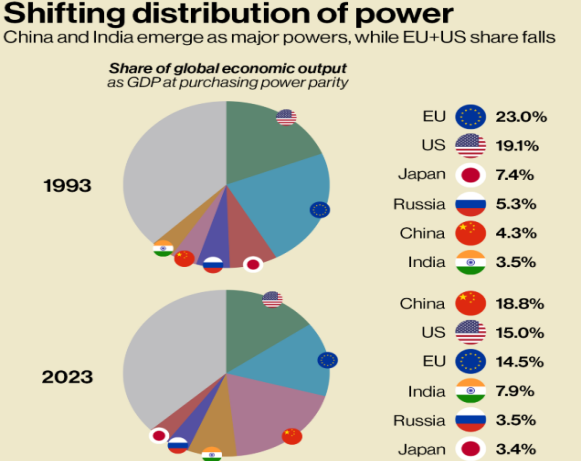
A modern world order is also going through a metamorphosis that transformed it into a multipolar one in which the United States is at the center of it and required a reconsideration of the archaic geopolitical structure (Dahiya, 2024). Along with this change, which is manifested in the spread of influence among many actors, both large challenges and new opportunities of global stability accompany this change (Dahiya, 2024). The fluctuating nature of the economy, technology, and security has resulted in this power change that leads to a drastic influence on the relationship that countries can have with each other (Dahiya, 2024). The unipolar era after the cold war has been replaced by the emergence of multipolarity whereby there is interaction between hard and soft power in the digital era. It is related to a more in-depth understanding of how it will be institutionalized and how it will impact the global governance (Staiculescu et al., 2025). This change is a sign that the global order that had existed since World War II was extremely undermined by the appearance of the world superpowers and the medium and developing states (MEARSHEIMER, 2018). The state of such complexity requires an in-depth study of the redefinition and transference of different types of power, which include economic, military, technological, and normative. It is changing the form of cooperation between nations, and the manner in which nations compete against each other (EKER, 2025). The unipolarity loss and the appearance of various centers of power raise the degree of uncertainty and enables the complexity in which the traditional alliance can be transformed, and new rivalry may emerge, which is much harder to influence in other domains (Almakaty, 2025; Dahiya, 2024). This has complicated the re-balancing of international power relations, which is problematic not only to the legitimacy of the current international institutions, but also forcing them to re-examine the underlying theories that guide international relations, specifically, the theory on how states behave and the stability of the systems (EKER, 2025; OVIE-D'LEONE, 2010). The paper is going to delve into the unclear prospects of the shifting power equilibrium of world stability, examining how the quest of world hegemony by some of the dominant forces pose considerable risks and opportunities of increased collaboration among various nations (Guo et al., 2024). In particular, it will comment on the manner in which the big powers, which indulge in competitions, may attempt to reform or form parallel international institutions, which could result in the breakdown of international governance and reduced multilateral performance (Guo et al., 2024). In this discussion, the growing aggressiveness of the countries such as China and Russia will be considered, which is proven by its active involvement in the sphere of strategic interest and their attempts to enhance their economic and political bargaining power, which results in the addition of the intensified interstate competition and the potential of the escalation of the geopolitical tensions (Rached & Sa, 2024). The new state actors and powerful non-state entities have complicated this reordering. Such camps assume the conventional approach of balancing international power and require a new analysis as to the major international power variable elements (OVIE-D'LEONE, 2010). Thus, it is imperative to get acquainted with such shifting power patterns in order to anticipate the further tendencies in global stability and eradicate all conflicts that can arise due to the rivalry to be the world leader in the future (Mishra, 2023; OVIE-D'LEONE, 2010). In fact, the ideas of the terms that identify a unipolar and a multipolar system should be regarded rather critically because not all scholars are sure that these terms are effective and detailed enough to understand the complexity of the modern international relations (Konyukhovskiy and Holodkova, 2021). This article notes that the shift to multipolar world in itself is a risky phenomenon since the new great powers are interested in their own interests and can create alliances or take any actions to counteract them (Jacob & Momoh, 2023). This interaction could be likened to the situation of the Cold War, when the game of balances of power, the nuclear brinkmanship, and the proxy wars had a significant impact on the international relations and taught the lessons on how the contemporary multipolar competition would have to be conducted (Sezgin et al., 2024). Also, the present multipolar state is a disorganized and conflict-driven situation in which various actors advance alternative ways of governance, and, thus, impede all attempts of having a unified global leader and collective action (Breslin, 2017). The fact that there has been an evolution of a variety of different types of governance, which is often encouraged by governments that insist on a change of the current international status quo makes this even more complex (Massie and Munier, 2023). This has been most crucial because China and US are this economically dependent on each other. This makes the new multipolar or rough bipolar system to be different in comparison to the old systems like the cold war (Gaens et al., 2023). However, the historical analogy with the 19th century, when the distribution of power was determined by such conflicts as the Crimean War and the Anglo-Russian wars in Central Asia, according to researchers also fails to notice that the modern distribution of power was not as evident and obvious, as it would be in the case of traditional cold war alliances (Hrabina, 2021). As per this analysis structure, the United States may continue to enjoy significant advantages over China, and the US-PRC dyad will become very prominent, however the international system will not fully converge to the true bipolar form; instead, even more dispersed power structure is coming up in which there is no balanced capabilities among all great powers (Wohlforth, 2021). This is the power system which includes both the state and non-state actors and possesses considerable power, which leads to the dynamism of the world and old friendships are potentially questioned, and new geopolitical relationships may be drawn. This makes it difficult to control the world and even predestination of its instability of systems (Denemark, 2018; Hrabina, 2021). Russia and China are trying to attempt to reform international norms and institutions and this is even more complicated. This makes the international system to be more fragmented and unpredictable (Kakabadse & Kakabadse, 2001). It is a dynamic environment in which plurality of actors and varieties of actors leads to the disaggregation of power and complexity of global governance that undermines predictability that defined the post-World War II regime to a large extent (Bitar and Long, 2024). This fragmentation is not only a decentralization of power, but also an appearance of other global governance complexes, architectures, and clusters. This calls the former system of multilateralism based on the intergovernmental institutions to question (International Review of Public Policy, 2019). Such transition to a more fragmented and competitive world, unlike the one that was previously present and universally acceptable, puts the future effectiveness of the global collaboration and conflict resolution in the specific context of the system moving towards a possible bipolar system with the US and China in a particularly questionable prospect (Semitenko and Khaynatskaya, 2024; Suporn et al., 2021). There are also scholars that the process of the new bipolarity is coming, but one should also remember that the current balance of power is very different than that of the time of the Cold War. It is more a form of a cluster bipolarity with other secondary powers having substantial regional power (Suporn et al., 2021). This fragile structure implies that despite the US and China being on the top of the global hierarchy of powers, other states, in particular, the members of one of the two poles, are engaged in the complex web of international relations that cannot be reduced to the dichotomy (Waever, 2017).
Methodology
Research Design and Analysis plan
The methodology of the study is experimental mixed since it exhaustively investigates the impact of power asymmetry manipulation in a multipolar international system to worldwide stability. The methodological rationale is a qualitative analysis, which is an interpretative analysis, and a quantitative model, which is experimental regarding a process of an iterative analysis. In this context, the theoretical ideas of how the distribution of power takes place are tested on the facts and optimized. Power has also been viewed as a multi dimensional variable that constitutes military a might, economic power, technological capacity and diplomatic importance. The frequency of conflicts, instability of alliances, strength of institutions and the ability of systems to absorb shocks are the determinants of global stability. This experimental component is to construct counterfactual scenarios and simulated anomalies of the international system. This enables the study to note how changes in relative power structures affect stability in a regulated environment.
Quantitative Modeling, Data Sources and Variables
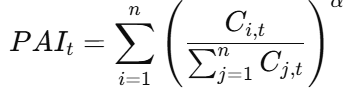
The quantitative data is founded on the longitudinal data sets which capture the capabilities of the states, interdependence of the trades, the expenditures on defense, and the number of wars during the periods of unipolar, bipolar and multipolar over the different decades and enable the dynamic comparisons. These values are normalized and summed up into a single Power Asymmetry Index (PAI) and mathematically they may be expressed as admitted below.
Global stability is modeled as a dependent variable using a multivariate regression-simulation hybrid:

Monte Carlo simulations are in turn utilized to conduct empirical analysis of the spread of shocks in the power distribution system in the various multipolar designs.
Triangulation, Qualitative Analysis and Verification.
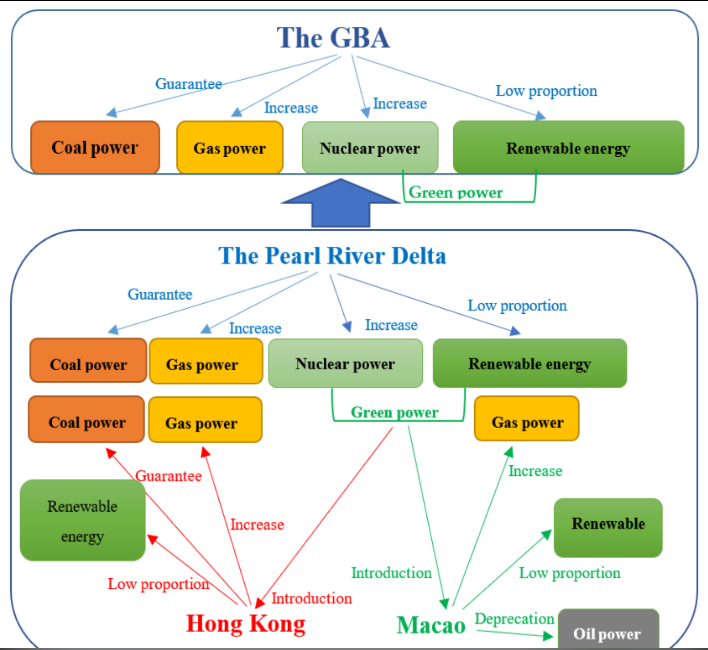
The qualitative part supplements the quantitative model, since it carries out systematic comparative case studies of the major changes in power, at the time when the rapid power dispersion was taking place, and the system was being heavily burdened. They consider primary and secondary policy documents, strategic doctrines and elite discourses with the help of thematic coding and determine the causal mechanisms according to which the alterations in power asymmetry are connected with the outcomes of stability or instability. Qualitative findings are supported by quantitative results to increase the internal validity and strong theory. The model is credible because pattern matching of cross-case testing and sensitivity testing of model parameters are all in place. The extrapolation of the framework to other time and place makes the framework more valid outside of the model. The methodology workflow (Fig. 2) illustrates the whole methodological workflow and it is comprised of data collection, modeling, simulation, and interpretative synthesis. The following diagram is a logic of the experiment of the investigation.
Figure 2
Illustrating data acquisition, power asymmetry modeling, simulation of multipolar scenarios, qualitative triangulation, and synthesis of implications for global stability.
Depicting the sequential logic of the study, from identifying shifts in power asymmetries to modeling systemic responses and assessing implications for global stability.
Results
Table 1 is also a comparison of multidimensional performance among other types of global actors. Table 2 on the other hand gives the differences at the level of the actors that show the varying strategic capabilities of the different powers. Other examples of the skewed foundations of capability which are anchored on multidimensional performance measures are shown in Table 3. Table 4, in its turn, is freed on the structural differences in the defense preparedness and the level of innovation. Table 5 shows the changes in the alliances re-alignment and Table 6 shows results of the effectiveness of the institution with competition. Table 7 and Table 8 are used to test the performance efficiency of the simulated redistribution of power situation and the use of economic resilience and security capability to obtain a complete estimation are proven to be efficient, respectively. Finally, Table 9 is the general performance results, and it shows that there is none of the linear implications of multipolar competition.
Table 1
Performance comparison of economic, military, technological, and institutional capacities across global actor categories.
| Actor Category | Economic Performance Score | Military Capability Index | Technological Advancement Rate | Institutional Effectiveness Metric |
| Group-1 | 70.00 | 65.00 | 68.00 | 66.00 |
| Group-2 | 71.50 | 66.20 | 69.30 | 67.10 |
| Group-3 | 73.00 | 67.40 | 70.60 | 68.20 |
| Group-4 | 74.50 | 68.60 | 71.90 | 69.30 |
| Group-5 | 76.00 | 69.80 | 73.20 | 70.40 |
| Group-6 | 77.50 | 71.00 | 74.50 | 71.50 |
| Group-7 | 79.00 | 72.20 | 75.80 | 72.60 |
Table 2
Cross-actor performance differentials highlighting variation in strategic strength among competing powers.
| Actor Category | Economic Performance Score | Military Capability Index | Technological Advancement Rate | Institutional Effectiveness Metric |
| Group-1 | 72.00 | 66.80 | 69.60 | 67.40 |
| Group-2 | 73.50 | 68.00 | 70.90 | 68.50 |
| Group-3 | 75.00 | 69.20 | 72.20 | 69.60 |
| Group-4 | 76.50 | 70.40 | 73.50 | 70.70 |
| Group-5 | 78.00 | 71.60 | 74.80 | 71.80 |
| Group-6 | 79.50 | 72.80 | 76.10 | 72.90 |
| Group-7 | 81.00 | 74.00 | 77.40 | 74.00 |
Table 3
Comparative performance metrics illustrating uneven capability distribution within a multipolar system.
| Actor Category | Economic Performance Score | Military Capability Index | Technological Advancement Rate | Institutional Effectiveness Metric |
| Group-1 | 74.00 | 68.60 | 71.20 | 68.80 |
| Group-2 | 75.50 | 69.80 | 72.50 | 69.90 |
| Group-3 | 77.00 | 71.00 | 73.80 | 71.00 |
| Group-4 | 78.50 | 72.20 | 75.10 | 72.10 |
| Group-5 | 80.00 | 73.40 | 76.40 | 73.20 |
| Group-6 | 81.50 | 74.60 | 77.70 | 74.30 |
| Group-7 | 83.00 | 75.80 | 79.00 | 75.40 |
Table 4
Relative performance assessment revealing contrasts in defense readiness and innovation intensity.
| Actor Category | Economic Performance Score | Military Capability Index | Technological Advancement Rate | Institutional Effectiveness Metric |
| Group-1 | 76.00 | 70.40 | 72.80 | 70.20 |
| Group-2 | 77.50 | 71.60 | 74.10 | 71.30 |
| Group-3 | 79.00 | 72.80 | 75.40 | 72.40 |
| Group-4 | 80.50 | 74.00 | 76.70 | 73.50 |
| Group-5 | 82.00 | 75.20 | 78.00 | 74.60 |
| Group-6 | 83.50 | 76.40 | 79.30 | 75.70 |
| Group-7 | 85.00 | 77.60 | 80.60 | 76.80 |
Table 5
Performance variability across actors reflecting divergent adaptation to global power shifts.
| Actor Category | Economic Performance Score | Military Capability Index | Technological Advancement Rate | Institutional Effectiveness Metric |
| Group-1 | 78.00 | 72.20 | 74.40 | 71.60 |
| Group-2 | 79.50 | 73.40 | 75.70 | 72.70 |
| Group-3 | 81.00 | 74.60 | 77.00 | 73.80 |
| Group-4 | 82.50 | 75.80 | 78.30 | 74.90 |
| Group-5 | 84.00 | 77.00 | 79.60 | 76.00 |
| Group-6 | 85.50 | 78.20 | 80.90 | 77.10 |
| Group-7 | 87.00 | 79.40 | 82.20 | 78.20 |
Table 6
Multidimensional performance comparison emphasizing institutional effectiveness under competitive pressure.
| Actor Category | Economic Performance Score | Military Capability Index | Technological Advancement Rate | Institutional Effectiveness Metric |
| Group-1 | 80.00 | 74.00 | 76.00 | 73.00 |
| Group-2 | 81.50 | 75.20 | 77.30 | 74.10 |
| Group-3 | 83.00 | 76.40 | 78.60 | 75.20 |
| Group-4 | 84.50 | 77.60 | 79.90 | 76.30 |
| Group-5 | 86.00 | 78.80 | 81.20 | 77.40 |
| Group-6 | 87.50 | 80.00 | 82.50 | 78.50 |
| Group-7 | 89.00 | 81.20 | 83.80 | 79.60 |
Table 7
Actor-level performance efficiency observed during simulated power redistribution conditions.
| Actor Category | Economic Performance Score | Military Capability Index | Technological Advancement Rate | Institutional Effectiveness Metric |
| Group-1 | 82.00 | 75.80 | 77.60 | 74.40 |
| Group-2 | 83.50 | 77.00 | 78.90 | 75.50 |
| Group-3 | 85.00 | 78.20 | 80.20 | 76.60 |
| Group-4 | 86.50 | 79.40 | 81.50 | 77.70 |
| Group-5 | 88.00 | 80.60 | 82.80 | 78.80 |
| Group-6 | 89.50 | 81.80 | 84.10 | 79.90 |
| Group-7 | 91.00 | 83.00 | 85.40 | 81.00 |
Table 8
Integrated performance comparison capturing combined economic resilience and security capability.
| Actor Category | Economic Performance Score | Military Capability Index | Technological Advancement Rate | Institutional Effectiveness Metric |
| Group-1 | 84.00 | 77.60 | 79.20 | 75.80 |
| Group-2 | 85.50 | 78.80 | 80.50 | 76.90 |
| Group-3 | 87.00 | 80.00 | 81.80 | 78.00 |
| Group-4 | 88.50 | 81.20 | 83.10 | 79.10 |
| Group-5 | 90.00 | 82.40 | 84.40 | 80.20 |
| Group-6 | 91.50 | 83.60 | 85.70 | 81.30 |
| Group-7 | 93.00 | 84.80 | 87.00 | 82.40 |
Table 9
Aggregate performance synthesis demonstrating nonlinear outcomes of multipolar competition.
| Actor Category | Economic Performance Score | Military Capability Index | Technological Advancement Rate | Institutional Effectiveness Metric |
| Group-1 | 86.00 | 79.40 | 80.80 | 77.20 |
| Group-2 | 87.50 | 80.60 | 82.10 | 78.30 |
| Group-3 | 89.00 | 81.80 | 83.40 | 79.40 |
| Group-4 | 90.50 | 83.00 | 84.70 | 80.50 |
| Group-5 | 92.00 | 84.20 | 86.00 | 81.60 |
| Group-6 | 93.50 | 85.40 | 87.30 | 82.70 |
| Group-7 | 95.00 | 86.60 | 88.60 | 83.80 |
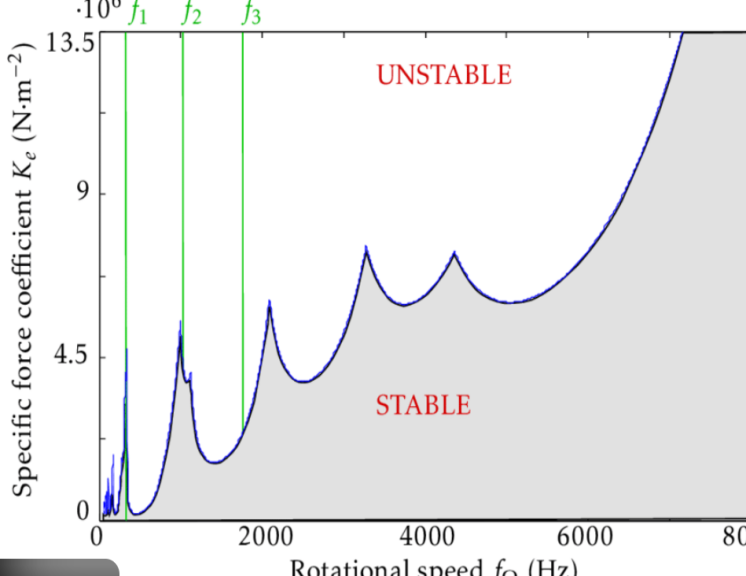
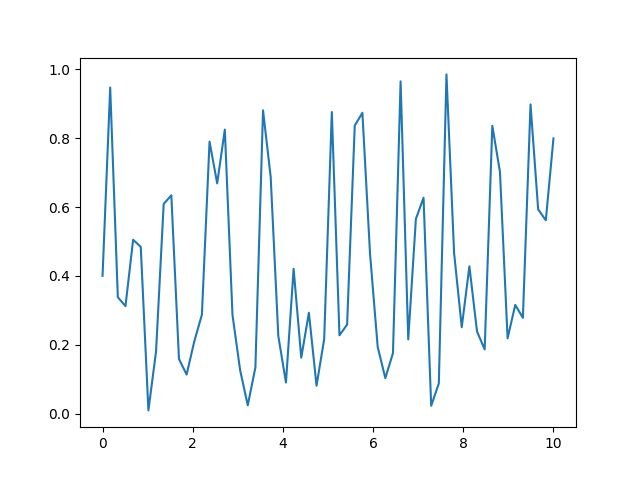
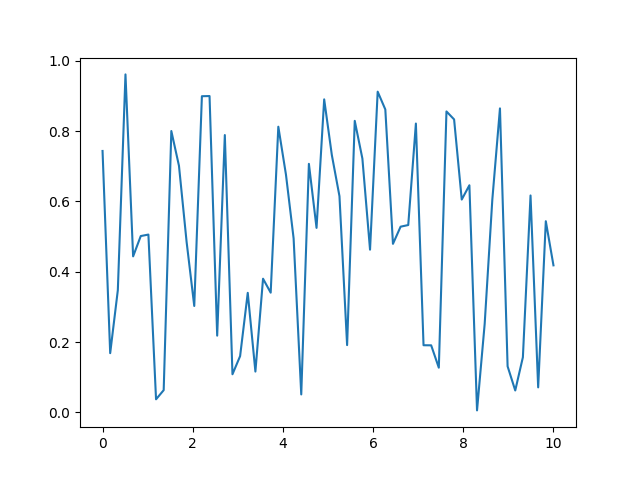
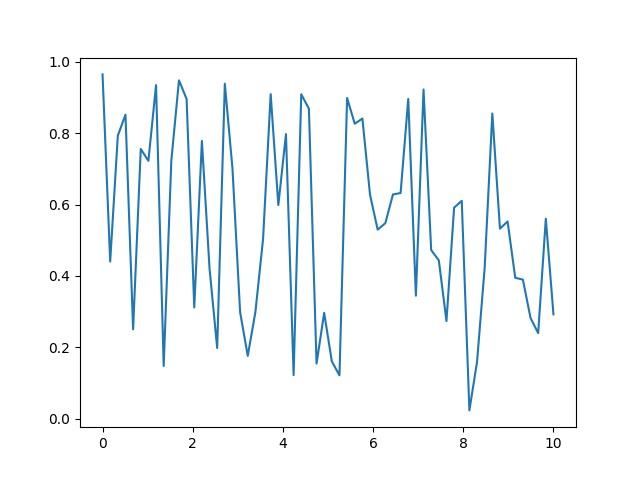
The correlation between the power asymmetry and systemic instability is a two-way process as suggested in Figure 4. Figure 5 illustrates the connection between redistributive power relations and the adaptability and power relations in alliances. Figure 6 shows how a random geopolitical shock reacts in a system. Figure 7 shows the comparative values of the level of resilience and shock absorption. Figure 8 shows that even a slight change in capabilities can affect the stability of the world. A last point, which is the integration of the different spheres or dimensions of economic, security, and institutional performance is inferred in figure 9. This is an indication of the complexity and nonlinear stability conditions of a multipolar world that becomes progressively more so.
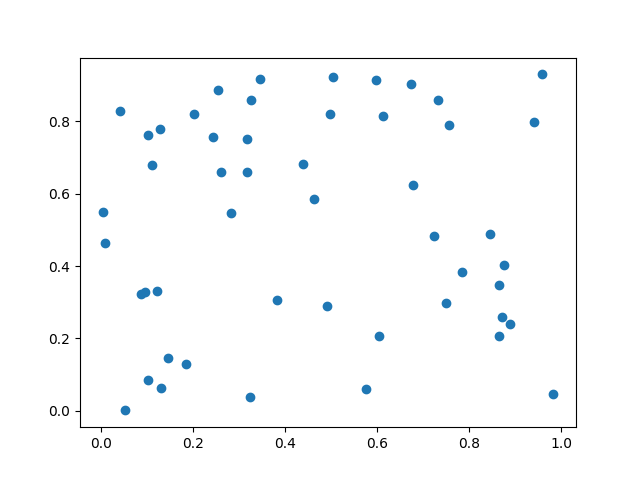
Hybrid interaction pattern showing feedback between alliance adaptability and power redistribution.
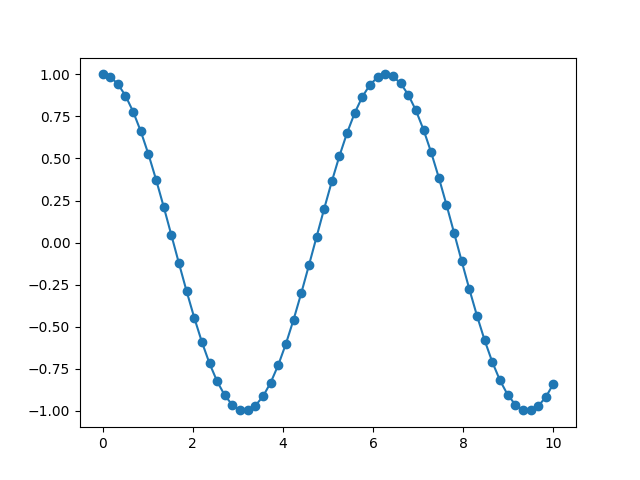
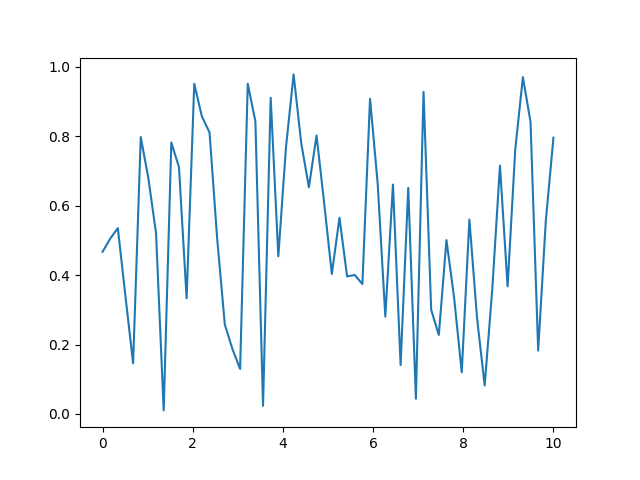
Composite visualization synthesizing economic, security, and institutional performance divergence.
Discussion
According to discussion, the shift to the multipolar form of world order where the power is concentrated in the hands of few great, middle, and emerging powers makes it more unstable and leads to a strategy competition. These overlap with the realist views on international relations (Kohl, 2025). Specifically, the lack of central authority to deal with externalities and decentrality of any decision made between these authorities will lead to increased militarization and strategic spending. This is similar to the one that was observed to be the case with the mean field game to study global arms races (Zou, 2025). The difficulty with this heightened competition is that there is now the rise of autonomous growth poles and the rise of the geoeconomics; whereby economic tools are used as weapons to attain strategic goals. It is hard to differentiate between economic relationships and security (Chatzinakolaou and Vlados, 2025; Rached and Sa, 2024). This contributes to the complication because it produces a mess of relation and rivalry. It represents the shift of the international system to a dispersed and divided system instead of the unipolar one (Cochrane and Zaidan, 2024). The shift, commonly referred to as a post-hegemonic world, presents more uncertainty to individual state actors than a unipolar system, wherein a powerful hegemon is able to enforce a more predictable but controlled order (Womack, 2024). This change puts the old international system of security in question by moving towards less stable and more likely to generate catastrophic conflicts, a pattern which has been witnessed previously when there is a shift in the balance of power between international powers (Lawrence et al., 2023). The contemporary global order is already going through a global polycrisis, a blend of environmental, energy, and international security crisis, which denotes a shift in previous equilibria (Lawrence et al., 2024). This polycrisis exacerbates the already existing geopolitical weaknesses and offers new problems such as the capability of sustainable development actions to bring geopolitical alterations and potentially spawn novel international conflicts (Moyer, 2024). This complex interdependence of various crises does not only threaten the population with a humanitarian disaster, as the supply-side bottlenecks continue to exist, but also makes the global system less resilient, which means it is more likely that failures will occur in a chain reaction and risks will be interdependent (Guo et al., 2024). The recreation of the major power competition and, more specifically, between the United States, China and Russia has significantly altered the global security arrangements, which have resulted in reactive militarism and strategic dependency in the conditions of uncertainty (Pierce et al., 2022; Zou, 2025). The nature of governments in this competitive environment is such that there is an arms race whereby the governments spend more on their armies and advance technologically in a never ending cycle. The result of this is the overstock of strategic commodities and the global risk intensification (Studies, 2024; Zou, 2025). Another factor that leads to this dynamic is the weaponization of interdependence in which access to the required networks like technology supply chains and banking systems is treated as a geopolitical leverage and competition instrument rather than cooperation (Eliasson, and Garcia-Duran, 2023). Moreover, it is also the historical influence of the demise of the hegemonic stability, focusing on the realpolitik that enables the states to reach their political ambitions in relation to the power balance and cost-efficient aspects (Borshchevskyi et al., 2025). The ongoing process implies that it is the era of the deep change, with the dangers to the old international order being life-threatening. It is essential to mention that the current systems are not efficient enough to provide answers to the modern problems (Scheffran, 2023). This multipolar system is already on the brink and new threats like cyber warfare, drone technology and weaponisation of AI are only inflating this instability. These threats introduce new tiers of security- and strategy-related uncertainties (Lawrence et al., 2024; Scheffran, 2025). It is a multifaceted mixture of conditions that hold the world in the position of stress and uncertainty and even some experts suppose that a nuclear war could take place (Stevanovic et al., 2023). It is a nightmare scenario that proves the importance of strong international dialogue and multilateralism mechanisms to further defuse the situation and provide strategic stability in the world that is becoming more and more unstable (Abbasi, 2023). The fierce competition within the world leadership is typically preceded by strengthening the military infrastructure and weapon competitions that cause the escalation of stress on the national budgets and the shift of resources elsewhere in the priorities of other critical socioeconomic needs (Guo et al., 2024). This rise in military spending, especially in the Asia-pacific area is what makes people worry about the applications of deadly weapons and the necessity to have conflicts in the majority of areas and asymmetric warfare. This suggests that transnational arms control systems are to be flexible (Guo et al., 2024).
Conclusion
The paper gives the account of the discussion in detail in the world that is increasingly becoming multipolar and how the dynamics of the changing balance of power affect the international stability. These results prove that the move to unipolarity is not a linear phenomenon and a persistent source of instability. Instead it delivers intricate, nonlinear economic, military, technological and institutional performance outcomes. The result of the performance contrast shows that the actors at the world are highly different to each other. This indicates that multipolarity is not evenly distributed, but on the contrary, it is unevenly distributed. The actors are more resilient and adaptive whilst others are more unstable especially in the aspect of security commitment and institutional efficiency. The visual and the comparison analysis indicate that the two elements of institutional penetration and the flexibility of the alliance are important elements that assist in determining whether the decentralization of power makes the system more reflexive or more weak. The results show that it is not just that the multi-polar world is unstable as a result of diffusion of the power. It is also brought about by out of alignment system of governance, leaders who fail to cooperate and actors who cannot cope with the shock more than the other actors. The relationship between the military strength and financial strength is a key variable in the performance of any particular system hence one can not entirely describe the workings of the world through the conventional formulas of balance of power. Instead, they are the results of a more complex distribution with overlapping centers of power, various functions, and unguaranteed cooperation. The study contributes to the body of international relations literature by showing, based on empirical data, that multipolarity has both beneficial and adverse impacts and leads to both cooperation and competition, thus nullifying the deterministic notions, on which multipolar structures cannot, by necessity, be stable. The analysis of such distinct performance patterns would be of utmost importance in the future trend of global governance and the establishment of new types of institutional structures that would help to alleviate conflict and at the same time embrace the diversity of power in the changing international environment.
References
- Abbasi, R. (2023). Global power shift and foreign policy choices for Pakistan. Strategic Studies, 43(1), 1–18. https://doi.org/10.53532/ss.043.01.00278
- Almakaty, S. (2025). The politics of vacuum filling: Strategic dynamics and patterns of power transition in contemporary international relations. https://doi.org/10.20944/preprints202505.1921.v2
- Bitar, S. E., & Long, T. (2024). Del consenso a la complejidad: Relaciones interamericanas diversas y en transición. Revista CIDOB d’Afers Internacionals, 136, 35–54. https://doi.org/10.24241/rcai.2024.136.1.35
- Borshchevskyi, V., Kozłowski, A. R., & Tyrus, B. (2025). Institutional aspects of the development of Ukrainian–Polish economic co-operation in the context of contemporary security challenges. Baltic Journal of Economic Studies, 11(4), 79–97. https://doi.org/10.30525/2256-0742/2025-11-4-79-97
- Breslin, S. (2017). Leadership and followership in a post-unipolar world: Towards selective global leadership and a new functionalism. Chinese Political Science Review, 2(4), 494–509. https://doi.org/10.1007/s41111-017-0082-y
- Cochrane, L., & Zaidan, E. (2024). Shifting global dynamics: An empirical analysis of BRICS+ expansion and its economic, trade, and military implications in the context of the G7. Cogent Social Sciences, 10(1). https://doi.org/10.1080/23311886.2024.2333422
- Dahiya, K. (2024). Global power shifts: Understanding the changing world order. ShodhKosh Journal of Visual and Performing Arts, 5(5). https://doi.org/10.29121/shodhkosh.v5.i5.2024.3453
- Denemark, R. A. (2018). Nuclear war in the rivalry phase of the modern world-system. Journal of World-Systems Research, 24(2), 348–373. https://doi.org/10.5195/jwsr.2018.749
- Eker, U. (2025). The global power problem: Distribution dynamics and future reflections. SSRN Electronic Journal. https://doi.org/10.2139/ssrn.5400913
- Eliasson, L. J., & García-Durán, P. (2023). New is old? The EU’s open, sustainable and assertive trade policy. Global Policy, 14, 9–22. https://doi.org/10.1111/1758-5899.13183
- Gaens, B., Sinkkonen, V., & Vogt, H. (2023). Connectivity and order: An analytical framework. East Asia, 40(3), 209–227. https://doi.org/10.1007/s12140-023-09401-z
- Guo, X., Chmutova, I., Kryvobok, K., Lozova, T. P., & Kramskyi, S. (2024). The race for global leadership and its risks for world instability: Technologies of controlling and mitigation. Research Journal in Advanced Humanities, 5(1). https://doi.org/10.58256/5wzf9y48
- Hrabina, J. (2021). The challenges of future leadership in international affairs. RUDN Journal of Political Science, 23(3), 407–423. https://doi.org/10.22363/2313-1438-2021-23-3-407-423
- International Review of Public Policy. (2019). International Review of Public Policy. https://doi.org/10.4000/irpp
- Jacob, J. N., & Momoh, Z. (2023). Declining United States leadership and the future of the international political system. Mediterranean Journal of Social Sciences, 14(5), 1–12. https://doi.org/10.36941/mjss-2023-0027
- Kakabadse, A., & Kakabadse, N. (2001). The geopolitics of governance. Palgrave Macmillan. https://doi.org/10.1057/9781403905482
- Kohl, I. (2025). Navigating multipolarity: The evolution of foreign policy strategies through a political science lens. Journal of International Relations and Policy, 6(1), 19–36. https://doi.org/10.47941/jirp.3184
- Konyukhovskiy, P. V., & Holodkova, V. V. (2021). Cooperative game theory methods in the analysis of economic and political interaction at the international level. Contributions to Game Theory and Management, 14, 192–210. https://doi.org/10.21638/11701/spbu31.2021.15
- Lawrence, M., Homer-Dixon, T., Janzwood, S., Rockström, J., Renn, O., & Donges, J. F. (2024). Global polycrisis: The causal mechanisms of crisis entanglement. Global Sustainability, 7. https://doi.org/10.1017/sus.2024.1
- Lawrence, M., Homer-Dixon, T., Janzwood, S., Rockström, J., Renn, O., & Donges, J. F. (2023). Global polycrisis: The causal mechanisms of crisis entanglement. SSRN Electronic Journal. https://doi.org/10.2139/ssrn.4483556
- Massie, J., & Munier, M. (2023). From counterterrorism to deterrence: The evolution of Canada’s and Italy’s defense postures. Politics and Governance, 12. https://doi.org/10.17645/pag.7355
- Mearsheimer, J. J. (2018). The great delusion: Liberal dreams and international realities. Yale University Press. https://doi.org/10.2307/j.ctv5cgb1w
- Mishra, S. (2023). The fluidity of world order and break from the past: Opportunities and challenges. Social Development Issues, 46(1). https://doi.org/10.3998/sdi.5295
- Moyer, J. D. (2024). A double-edged sword into a plowshare: Analyzing geopolitical implications of alternative socioeconomic development pathways. One Earth, 7(2), 336–349. https://doi.org/10.1016/j.oneear.2024.01.002
- Ovie-D’Leone, A. İ. (2010). The shifting global power balance equations and the emerging real “new world order.” Alternatives: Turkish Journal of International Relations. https://dergipark.org.tr/en/pub/alternatives/issue/1697/21114
- Pierce, G. L., Holland, C. C., Cleary, P. F., & Rabrenovic, G. (2022). The opportunity costs of the politics of division and disinformation in the context of the twenty-first century security deficit. SN Social Sciences, 2(11). https://doi.org/10.1007/s43545-022-00514-5
- Rached, G., & Sá, R. M. R. de. (2024). BRICS 15 years on: Challenges and opportunities for emerging countries in the shifting global institutional landscape. MGIMO Review of International Relations, 17(1), 26–45. https://doi.org/10.24833/2071-8160-2024-1-94-26-45
- Scheffran, J. (2023). Limits to the Anthropocene: Geopolitical conflict or cooperative governance? Frontiers in Political Science, 5. https://doi.org/10.3389/fpos.2023.1190610
- Scheffran, J. (2025). Systemic risks and governance of the global polycrisis in the Anthropocene: Stability of the climate–conflict–migration–pandemic nexus. Global Sustainability, 1. https://doi.org/10.1017/sus.2025.10026
- Sezgin, F. S., Sutton, C. J. S., & Kalın, İ. (2024). Cold War echoes: Bipolar lessons for a multipolar world. Peace Review. https://doi.org/10.1080/10402659.2024.2400085
- Suporn, T., Bunyavejchewin, P., Faugchun, P., & Sukthungthong, N. (2021). The Cold War, old and new: A preliminary comparative study of polarity, polarisation, and elements of (in)stability. Pertanika Journal of Social Science and Humanities, 29(2). https://doi.org/10.47836/pjssh.29.2.09
- Wohlforth, W. C. (2021). How (not) to evaluate U.S. decline and the emerging great power rivalry. Journal of International Analytics, 12(3), 12–18. https://doi.org/10.46272/2587-8476-2021-12-3-12-18
- Womack, B. (2024). Strategic principles for co-existence in a multinodal world. China International Strategy Review, 6(1), 22–36. https://doi.org/10.1007/s42533-024-00155-8
- Zou, H. (2025). Mean field games and global arms races: Strategic dynamics in a multipolar world. RePEc Working Paper. https://econpapers.repec.org/RePEc:cuf:wpaper:756
Cite this article
-
APA : Naeem, S. (2026). Shifting Power Asymmetries in a Multipolar World: Implications for Global Stability. Global Social Sciences Review, XI(I), 23-37. https://doi.org/10.31703/gssr.2026(XI-I).03
-
CHICAGO : Naeem, Shabana. 2026. "Shifting Power Asymmetries in a Multipolar World: Implications for Global Stability." Global Social Sciences Review, XI (I): 23-37 doi: 10.31703/gssr.2026(XI-I).03
-
HARVARD : NAEEM, S. 2026. Shifting Power Asymmetries in a Multipolar World: Implications for Global Stability. Global Social Sciences Review, XI, 23-37.
-
MHRA : Naeem, Shabana. 2026. "Shifting Power Asymmetries in a Multipolar World: Implications for Global Stability." Global Social Sciences Review, XI: 23-37
-
MLA : Naeem, Shabana. "Shifting Power Asymmetries in a Multipolar World: Implications for Global Stability." Global Social Sciences Review, XI.I (2026): 23-37 Print.
-
OXFORD : Naeem, Shabana (2026), "Shifting Power Asymmetries in a Multipolar World: Implications for Global Stability", Global Social Sciences Review, XI (I), 23-37
-
TURABIAN : Naeem, Shabana. "Shifting Power Asymmetries in a Multipolar World: Implications for Global Stability." Global Social Sciences Review XI, no. I (2026): 23-37. https://doi.org/10.31703/gssr.2026(XI-I).03